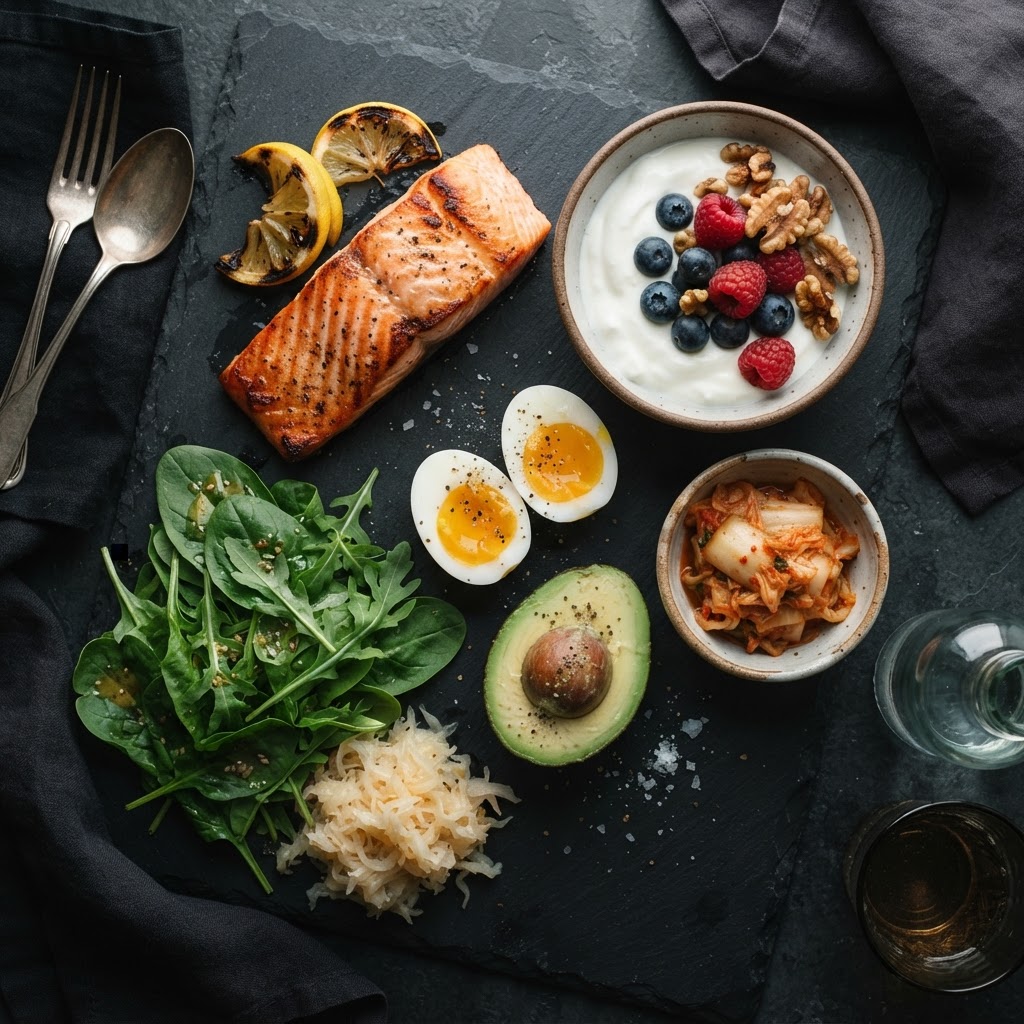
Nutrition Protocol for Ligament Recovery
14 days. 3 high-protein meals a day. No eating after 6pm. A 15-16 hour fasting window that lets your gut microbiome repair overnight. Every meal includes fermented foods to seed the bacteria that regulate inflammation, recovery and performance. Your digestive system is a muscular system, it contracts, moves and performs. This isn't a diet, it's a digestive system recalibration.
15-16 Hour Fast
Stop eating by 6pm. Delay your first meal until late morning, 10am or whenever your body signals readiness. This window lets your microbiome repair and your gut lining reset.
Protein First
Every meal leads with protein and casein is the slow-digesting protein. It curds in your stomach, so it digests slowly and keeps the repair signal feeding your chains for hours. If you're hungry outside the window, you haven't eaten enough protein, not enough calories. Increase the volume, don't break the fast.
Fermented Daily
Sauerkraut, kimchi, kefir, fermented pickles, or fermented beets every single day. These seed your gut with the bacteria that regulate inflammation, mood and recovery.
Plant-Forward
Not every meal needs meat. Lentils, chickpeas, tempeh, tofu and pea protein carry the load without the inflammatory burden. Your microbiome thrives on plant diversity.
Smart Carbs
Sweet potato, healthy potato wedges and hearty veg-heavy half-blended soups fuel the muscular work without spiking inflammation. Carbs that work with the system, not against it.
The First 5-7 Days: Digestive Recalibration
Your digestive system needs 5 to 7 days to regulate. You'll feel hungry, that's not a calorie deficit, it's your gut adjusting to the new rhythm. If hunger hits outside your eating window, you haven't eaten enough protein at your meals. Increase the protein volume, don't break the fast. By day 7, your microbiome will have shifted and the hunger will quiet.
Foods High in Casein
Casein is the slow-digesting protein in dairy and the reason is mechanical. The moment it hits your stomach acid, casein curds, it coagulates into a dense gel that the gut breaks down slowly, releasing amino acids in a steady drip for hours rather than a fast spike. That curding is what makes it a slow-digestion protein: the gel resists rapid emptying, so the repair signal keeps feeding the ligament chains you're calibrating long after the meal is finished. It is the overnight repair protein, taken in the evening window, the curd carries the drip straight through your fasting window while you sleep. Work these whole-food sources into your meals, not powders.
Cottage Cheese
Richest whole-food source, slow drip overnight
Greek Yogurt
Casein + live cultures, double duty
Kefir
Fermented casein, repair + microbiome in one
Hard Cheese
Parmesan, cheddar, concentrated casein
Whole Milk
Natural casein-to-whey ratio, unprocessed
Cottage cheese is the densest curd of them all, that is exactly why it sits heavy and feeds you for hours. A bowl of cottage cheese or Greek yogurt in your evening meal gives your body a casein curd that drips slowly straight through the 15-16 hour fast, so the repair signal never drops while the microbiome resets.
14-Day Meal Plan
Choose Your Day
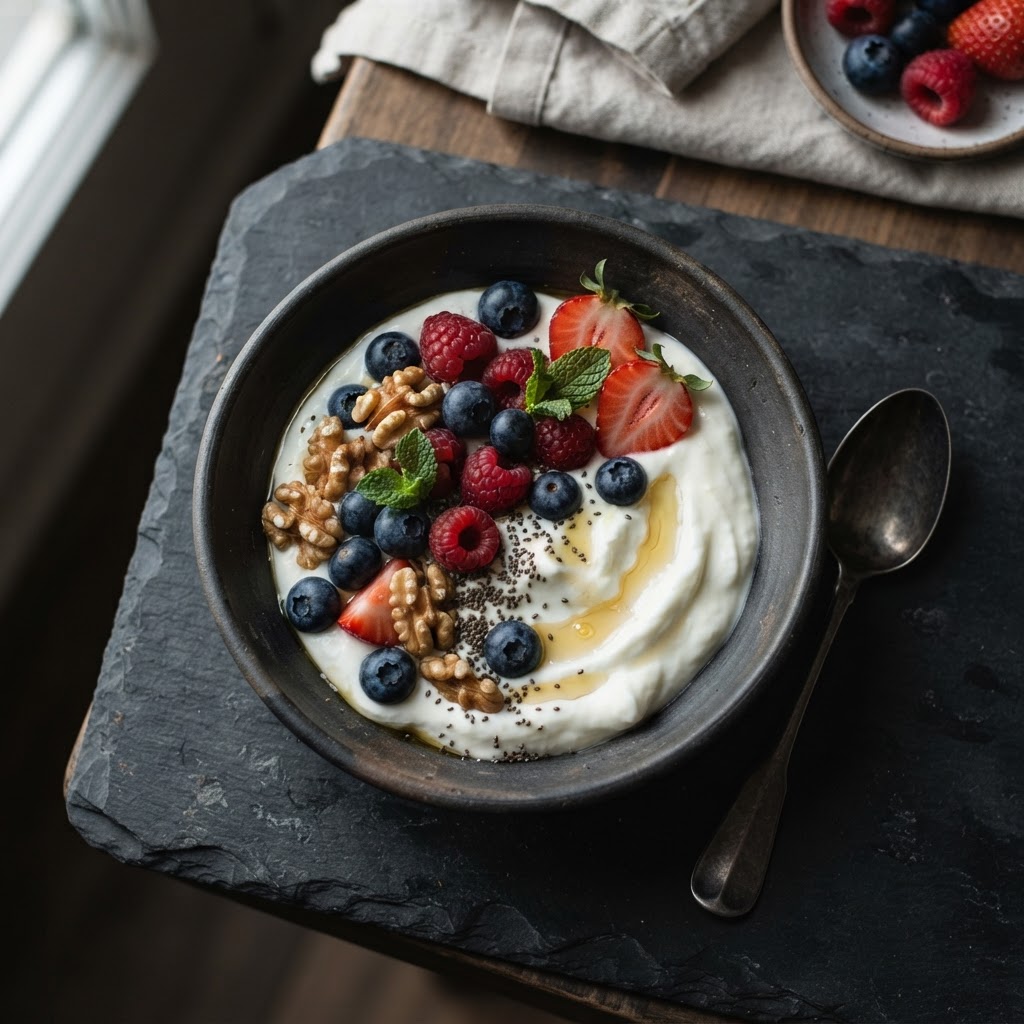
Greek Yogurt Parfait
Full-fat Greek yogurt layered with mixed berries, walnuts, and a splash of kefir. Probiotics from the yogurt and kefir seed your gut while the walnuts add omega-3s for ligament repair.
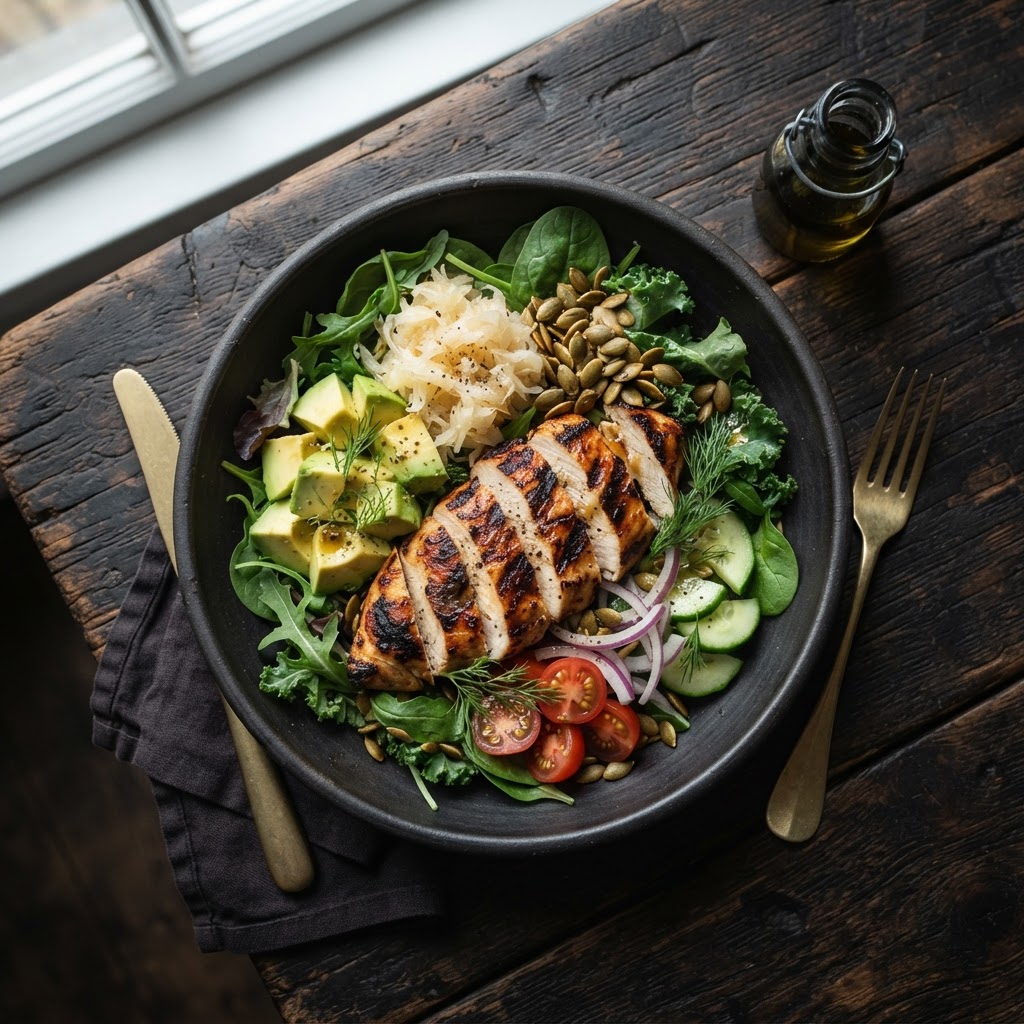
Grilled Chicken & Sauerkraut Salad
Grilled chicken breast over mixed greens with avocado, sauerkraut, and pumpkin seeds. The sauerkraut delivers live probiotics; the pumpkin seeds add zinc for recovery.
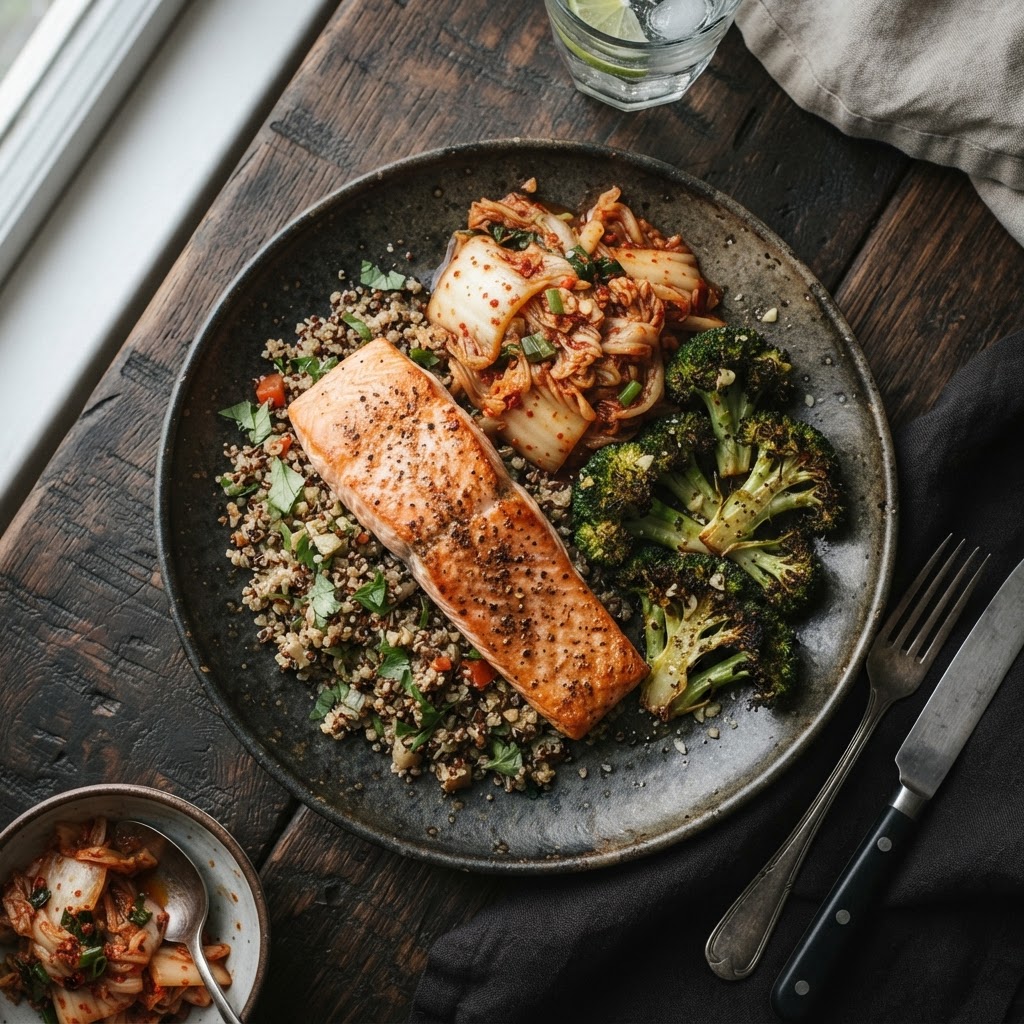
Baked Salmon with Kimchi & Quinoa
Wild-caught salmon baked with a side of kimchi, quinoa, and roasted broccoli. The kimchi ferments your gut microbiome; the salmon delivers omega-3s for ligament repair.
Why It Works
The Microbiome Engine
Your gut microbiome is the control center for inflammation, recovery and immune function. When it's starved of fermented foods and fiber, the bacteria that keep your system calm die off and the ones that drive inflammation take over.
This protocol rebuilds that ecosystem from the ground up. Every meal includes a fermented element, sauerkraut, kimchi, kefir, or fermented vegetables, that seeds your gut with live cultures. Combined with the 15-16 hour fasting window, your microbiome gets the time and the fuel it needs to repair overnight.
The protein is non-negotiable. Every meal leads with a clean protein source, eggs, fish, chicken, lentils, tempeh, or pea protein. No whey, no dairy-based powders. Only pea protein if you need a shake. The protein repairs the ligament chains you're calibrating; the fermentation repairs the system that delivers the repair.