WE MEASURE
THE RESPONSE.
Movement is visible. The response behind it has to be established, measured and tested.
ONE INDIVIDUAL. ONE RESPONSE. MEASURED AGAIN.
SEE HOW THE METHOD WORKSMOVEMENT IS THE OUTCOME.
THE RESPONSE COMES FIRST.
Two people can perform the same movement and respond differently to load.
I AM 900 starts with the individual. We establish the current response, examine how load and pressure are being received, apply calibration, and then measure again.
The objective is simple: know where the individual is before calibration, then establish what changed after it.
WE MEASURE THE RESPONSE.
THE METHOD
The Operational Framework
WHAT HAPPENS
AT EVERY STAGE.
One understandable backbone runs through every I Am 900 pathway. The existing methodology below explains what we investigate and how — these five stages explain what happens.
BASELINE
Establish and save the starting measurement.
MEASURE
Record the relevant measurable signals for the pathway.
CHANGE
Apply the selected programme or practitioner-directed change.
RE-TEST
Repeat the relevant comparable measurement.
COMPARE
Compare current against baseline and previous comparable session.
The Loop
Practitioner Actions
Software does not make diagnostic conclusions automatically. The practitioner reviews the comparison and sets the next programme.
How We Measure It
One Measurement Language. Three Instruments.
Every I Am 900 reading is built from the same measurement vocabulary — and every reading is compared against the individual's baseline.
Sensor Sling
Distributed pressure sensed through the fabric-supported Sling, plus the Sling's integrated sensor measurements — angle, movement and repeatability.
Pressure Mat
Ground and contact pressure during movement, including left and right loading.
Platform
Synchronises and compares the measurements, so baseline and retest always refer to the same reference points.
Compare what changed
CONNECTED KINETIC-CHAIN ASSESSMENT
YOUR BODY DOESN'T MOVE ONE JOINT AT A TIME.
Understand how movement, loading and rotation connect through the entire kinetic chain.
I AM 900 brings together movement-angle information, instrumented sling loading and video analysis to examine how different parts of the body work together.
From foot position and push-off through the knees, hips and pelvis, and onwards through the trunk, shoulders, arms and hands, the system helps make movement patterns and loading responses more visible.
The aim is not to look at one joint in isolation. It is to understand how connected movement changes under different conditions and how those responses can inform individual calibration and retesting.
- Foot orientation
- Foot movement angles
- Ankle movement
- Push-off mechanics
- Movement timing
- Left/right movement comparisons
- Loading information where measured
- Knee movement angles
- Knee position during movement
- Knee movement relative to foot and hip
- Left/right movement differences
- Changes during supported movement
- Hip movement angles
- Pelvic orientation
- Pelvic rotation
- Pelvic movement during loading
- Left/right loading relationships
- Pelvic movement relative to the trunk
- Trunk orientation
- Thoracic rotation
- Trunk movement angles
- Coordination between pelvis and thorax
- Movement sequencing
- Changes under supported loading
- Shoulder movement angles
- Arm orientation
- Upper-body pulling direction
- Hand-sling loading
- Coordination between arms and trunk
- Left/right pulling differences
- Head orientation
- Neck rotation
- Head movement relative to the trunk
- Cervical movement patterns
- Head, neck and thoracic relationships
Part of the relevant expanded or bespoke assessment configurations.
Head, neck and thoracic analysis is presented as part of the relevant expanded or bespoke assessment configurations. Not every analysis is promised in every programme.
INSTRUMENTED SLING SYSTEM · IMUs · VIDEO ANALYSIS
THE SLINGS DON'T JUST SUPPORT MOVEMENT.
THEY HELP REVEAL HOW YOU LOAD IT.
I AM 900 uses supported movement together with available sensor measurements and movement analysis.
The waist and pelvic sling provides a supported loading environment in which pelvic movement, loading response and left/right differences can be examined. Hand slings introduce additional upper-body loading and pulling relationships.
IMUs contribute movement-angle and rotation information. Video analysis adds visual information about movement patterns and coordination. Together, these measurements and observations help build a more complete picture of connected movement.
- Supported pelvic movement
- Loading through measured sling contact points
- Left/right loading response
- Pelvic movement under changing conditions
- Relationship between pelvis and lower limbs
- Upper-body pulling
- Measured loading where instrumented
- Arm and shoulder movement
- Trunk coordination
- Left/right pulling patterns
- Movement angles
- Rotation
- Segment orientation
- Movement timing
- Connected movement patterns
- Comparison across repeated tasks
WHAT IS AN IMU?
IMU means Inertial Measurement Unit. IMUs provide movement information such as orientation, angular movement and rotation. Depending on placement, calibration and configuration, IMU information can be used to analyse movement across connected body segments. The higher equipment tiers use progressively more extensive IMU configurations, allowing analysis across more body segments and movement relationships.
Core IMU-supported movement analysis.
Expanded IMU configuration and broader movement analysis.
More comprehensive multi-segment IMU configuration.
Individually configured IMU and movement analysis system.
- Sensor readings show loading at measured contact points; they do not directly measure pressure inside a joint.
- IMUs provide orientation and rotation information; they do not directly measure muscle activation or force.
- Video provides movement observation; it does not directly measure internal joint pressure.
- Measured data, estimated quantities and movement observations are treated as separate information.
HOW THE COMPLETE SYSTEM WORKS
OBSERVE. MEASURE. CONNECT. CALIBRATE. RETEST.
OBSERVE
Review how you move — video, movement tasks and available sensor information.
MEASURE
Collect the measurements supported by the configured equipment: sling loading, IMU movement information and movement-angle relationships.
CONNECT
Examine how different body segments and loading responses relate across the kinetic chain.
CALIBRATE
Use the findings, and your reported experience, to guide the individual movement programme.
RETEST
Repeat appropriate movement tasks and compare the response.
ESTABLISH THE INDIVIDUAL.
The method begins with the individual — not a generic protocol. The 900 Dossier establishes the relevant profile and creates the record through which assessment, calibration, retesting and response history are connected.
YOUR RESPONSE. YOUR DOSSIER.
EXPLORE DOSSIERSESTABLISH THE LOADING RESPONSE.
The 900 Loading Column™ provides the framework for examining how the individual receives, distributes and responds to load through defined regions. We are not simply watching whether a movement can be completed. We are establishing the response occurring through the movement.
WE DON'T JUST LOOK AT MOVEMENT.
WE MEASURE THE RESPONSE.
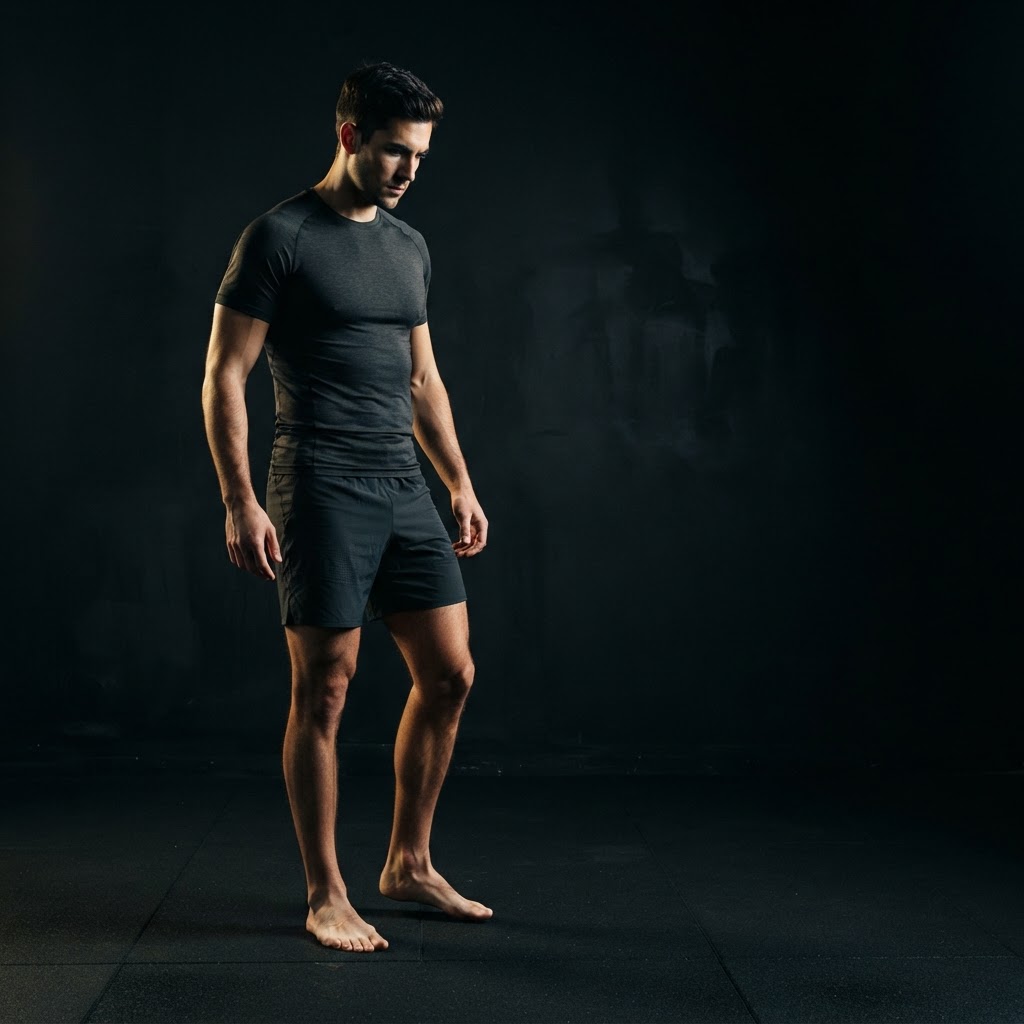
MEASURE.
Selected measurements add objective information to what is being observed. Pressure, loading and relevant movement data are recorded according to the pathway and assessment being performed.
The measurements used depend on the individual and the question being tested.
CALIBRATE.
Once the response has been established, calibration begins. The 900 Calibration System™ uses the I AM 900 Sensor Sling to work with the individual's pressure and loading response and establish a calibrated reference.
MEASURE THE PRESSURE. CALIBRATE THE RESPONSE.
THE SLING IS THE INSTRUMENT. CALIBRATION IS THE PROCESS.
EXPLORE THE CALIBRATION SYSTEM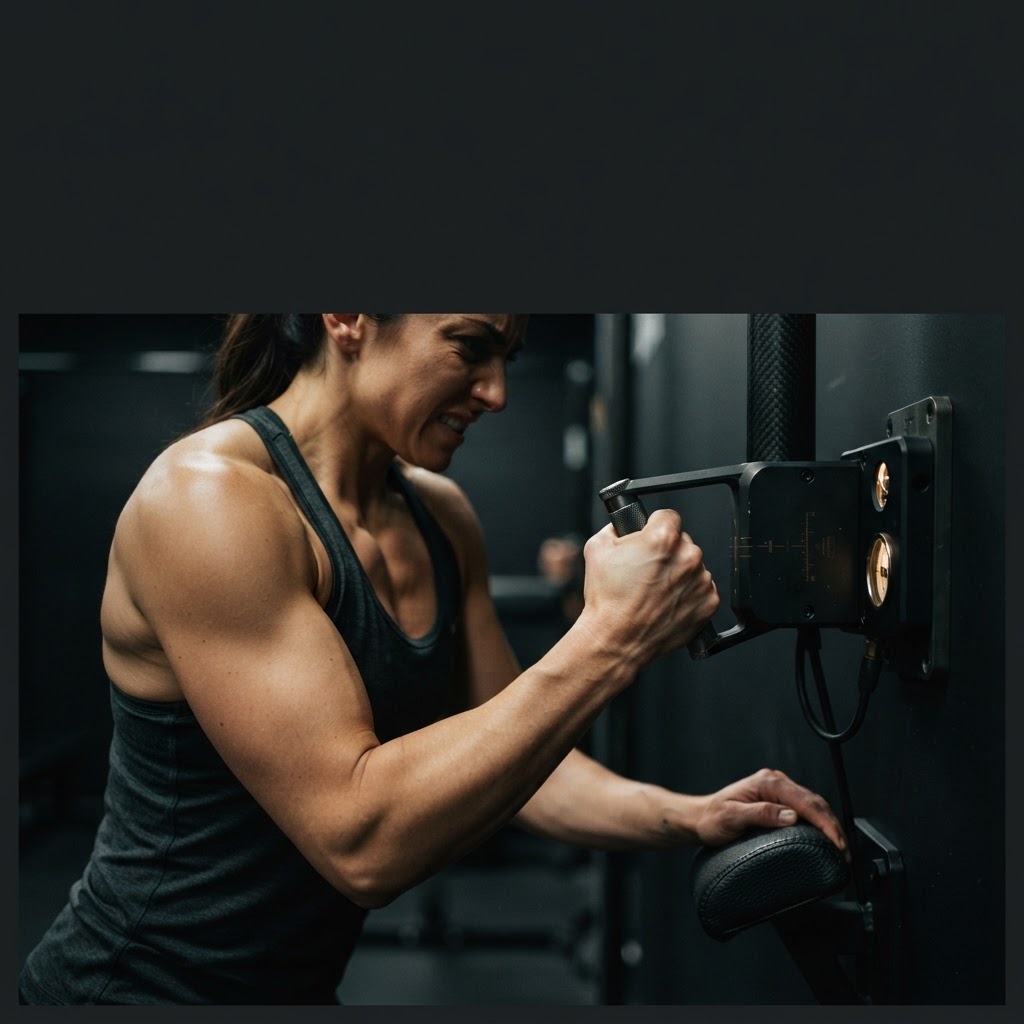
CHALLENGE THE RESPONSE.
The calibrated response is taken back into a demand relevant to the individual. That demand changes according to the pathway.
RETEST.
After calibration and the relevant challenge, the response is measured again. The same relevant measures are compared wherever appropriate so that the result is not based simply on impression.
RESPONSE STATES
BUILD THE RESPONSE HISTORY.
A single assessment captures a moment. The Dossier allows that response to be recorded across time. Assessment, calibration, challenge and retesting can become part of the individual's response history.
ONE INDIVIDUAL. ONE RESPONSE HISTORY.
PRESSURE
LEAVES
INFORMATION.
How pressure changes under load gives I AM 900 another way of examining the individual's response.
That information does not stand alone. It is interpreted as part of the Dossier, Loading Column and relevant assessment.
CALIBRATION IS NOT THE OUTCOME.
Creating a calibrated response is only part of the method.
The next question is more important:
WHAT HAPPENS
WHEN THE RESPONSE
IS CHALLENGED?
FROM CALIBRATION
INTO THE GAME.
Your 900 Dossier identifies your loading and calibration response. Now we take that response into the game.
ROTATE → LOAD → REACT → CATCH
PLANT → LOAD → ROTATE → KICK
LOAD → SPRING → ACCELERATE
"The athlete isn't told how every part of the body should respond. They're given the sporting task. I AM 900 measures what happens when they react."
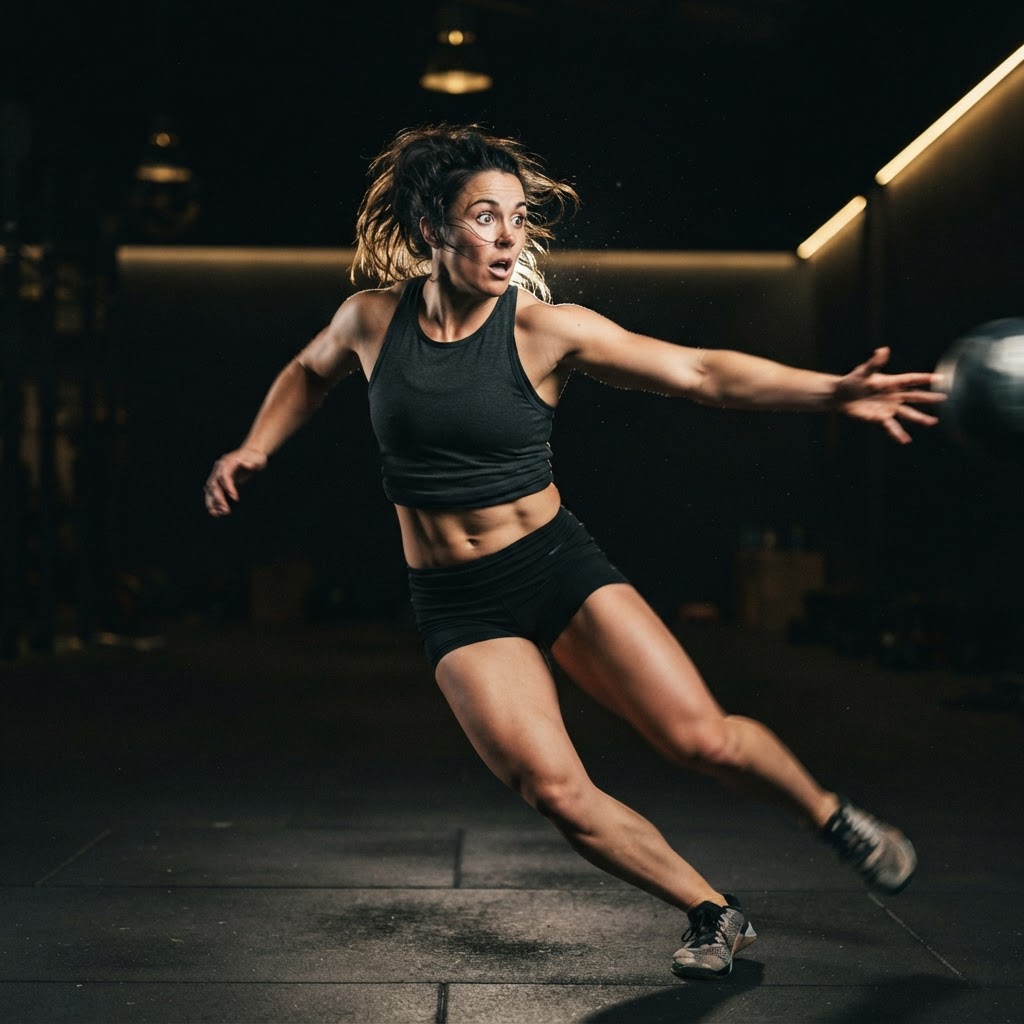
KNOW YOUR RESPONSE.
Repeated calibration gives the athlete a reference.
The sporting challenge then requires the athlete to perceive the task, react and reproduce the response without being instructed through every part of the movement.
This adds another layer to the method: the athlete begins to recognise their own response under demand.
PHYSICAL RESPONSE. MOVEMENT. REACTION. CONFIDENCE.
THE DEMAND CHANGES.
THE METHOD DOESN'T.
PAIN
TRAUMA
DISC
"Different pathways. The same principle: establish the response, calibrate, then measure again."
WE MEASURE WHAT CHANGED.
SPORT (WHERE RELEVANT)
Timing varies by pathway. Not every pathway uses identical measurement points.
THE METHOD
CLOSES THE LOOP.
The Dossier establishes the individual. The Loading Column helps establish the loading response.
Measurement gives us evidence. The 900 Calibration System™ provides the calibration.
The relevant challenge tests the response. Retesting tells us what changed.
The Dossier records what happened next.
START WITH
THE BASELINE.
Before deciding what should change, establish what is happening now. The baseline is a reference — not a verdict, not a diagnosis and not a judgement.
A baseline records the physical response during a defined movement task, alongside what the person reports. On retest, the same task is repeated — so the person or athlete becomes their own comparison.
There is no universal "normal" to hit. The individual's own reference is the comparison — not a population target.
WHAT DO
WE MEASURE?
One measurement language runs through every pathway:
* Where the instrument configuration supports it
Not every assessment records every variable. The measurement set is chosen to fit the question being asked — and every reading is compared against the individual's baseline.
Two instruments, two surfaces — explained separately.
The I AM 900 Sensor Sling
A fabric-supported measurement device worn around the region being assessed. Where supported by the instrument configuration, it records:
- Distributed Sling pressure — how force is organised across the Sling's sensor zones
- Sensor-zone response — how individual zones respond as the task progresses
- Angle / orientation — the Sling's measured orientation as the body moves
- Changes over time — how the recorded response evolves during the task
- Timing — when measurable events occur
- Sequence — the order in which measurable events occur
- Repeatability — whether the response is consistent when the task is repeated
- Speed / rate of change — where the instrument configuration supports it
Where multiple Sensor Slings are genuinely used, relevant measurements at different locations may be recorded during the same defined task.
Pressure-Mat Measurement
A separate instrument recording a different surface:
- Ground / contact pressure during a defined task
- Left / right loading
- How loading distribution changes over time
Where both instruments are used, they provide different information about the same defined movement task. They are never combined into an invented single score.
Neither instrument diagnoses anything. Measurement records the physical response — it does not identify pathology, measure ligament strain directly, or predict injury.
CALIBRATION —
CHANGE THE INPUT.
Calibration changes a defined input or condition — the loading condition, the movement task, the calibrated reference the individual works with. The change is deliberate and specific, so the response can be measured again under the same defined task.
Calibration is a measurement decision, not a treatment promise. Not every change is an improvement, and not every difference means progress. What calibration gives us is a recorded comparison.
RETEST THE
RESPONSE.
Compare What Changed
The retest repeats the relevant task under sufficiently comparable conditions — same task, same measurement set, same reference points.
A difference between baseline and retest is measurable information. What it means depends on the task, the conditions and how repeatable the response was. A measured difference describes the response — it does not, by itself, establish why the difference occurred.
THE SAME LOGIC ACROSS
SPORT, PAIN AND TRAUMA.
PAIN
TRAUMA
The Sensor Sling does not measure psychological trauma. Measurement and personal context are recorded separately — neither substitutes for the other.
MEASUREMENT + CONTEXT
Measurement records the physical response. Context helps us understand the situation in which that response occurs. Neither should be presented as a substitute for the other.
I AM 900 Recorded Outcomes
Results, Measured Not Promised.
Sport
22%
AVERAGE RECORDED IMPROVEMENT OVER THREE WEEKS
I AM 900 recorded athlete outcomes show an average 22% improvement over three weeks.
The result is based on change recorded between I AM 900 baseline and retest measurements.
Individual results vary.
The Sport pathwayPain
50%
AVERAGE RECORDED IMPROVEMENT IN REPORTED PAIN OVER THREE WEEKS
I AM 900 recorded Pain outcomes show an average 50% improvement in reported pain over three weeks.
The result is based on the change in reported pain between baseline and reassessment.
Reported pain is a separate dataset from physical Sensor Sling measurements — the Sensor Sling does not directly measure pain.
Individual results vary.
The Pain pathwayHow We Measure Change
BASELINE
We establish the starting point.
↓
MEASURE
We record the relevant response.
↓
CALIBRATE
We change the input.
↓
RETEST
We repeat the assessment.
↓
COMPARE
We compare the result with baseline.
We measure the response.
These figures are I AM 900 recorded outcomes — internal platform data based on baseline and retest comparison. They are not published clinical research, not independent clinical trials and not guaranteed results.
Research & Evidence
The Evidence, Clearly Labelled.
Everything on this page falls into one of three categories. We label them separately so you always know what is our recorded data, what is published research, and what is our measurement process.
1 — I Am 900 Recorded Outcomes
22%
Average recorded improvement over three weeks — Sport
50%
Average recorded improvement in reported pain over three weeks — Pain
Any outcome figures shown on this page are I Am 900 recorded outcomes — internal platform data, not independent, peer-reviewed clinical research. Individual results vary.
Individual results vary.
2 — External Published Research
- Stergiou N, Decker LM. Human movement variability, nonlinear dynamics, and pathology: is there a connection? Human Movement Science, 2011.
- Johansson H, Sjölander P, Sojka P. Receptors in the knee joint ligaments and their role in the biomechanics of the joint. Critical Reviews in Biomedical Engineering, 1991.
Listed for general context only. These findings belong to their authors — they are not I Am 900 data, and I Am 900 does not claim them.
3 — I Am 900 Methodology / Measurement Process
Recorded outcomes are not where the system starts. Measurement is — Measure → Calibrate → Retest — supported by the operational backbone: Establish the baseline. Measure the response. Change the input. Retest. Compare what changed.
Read the MethodLIGAMENTS
CREATE
FREEDOM.
THE I AM 900 LIGAMENT METHOD™
WE MEASURE THE RESPONSE.
START WITH THE INDIVIDUAL.
READY TO START? WE MEASURE FIRST.