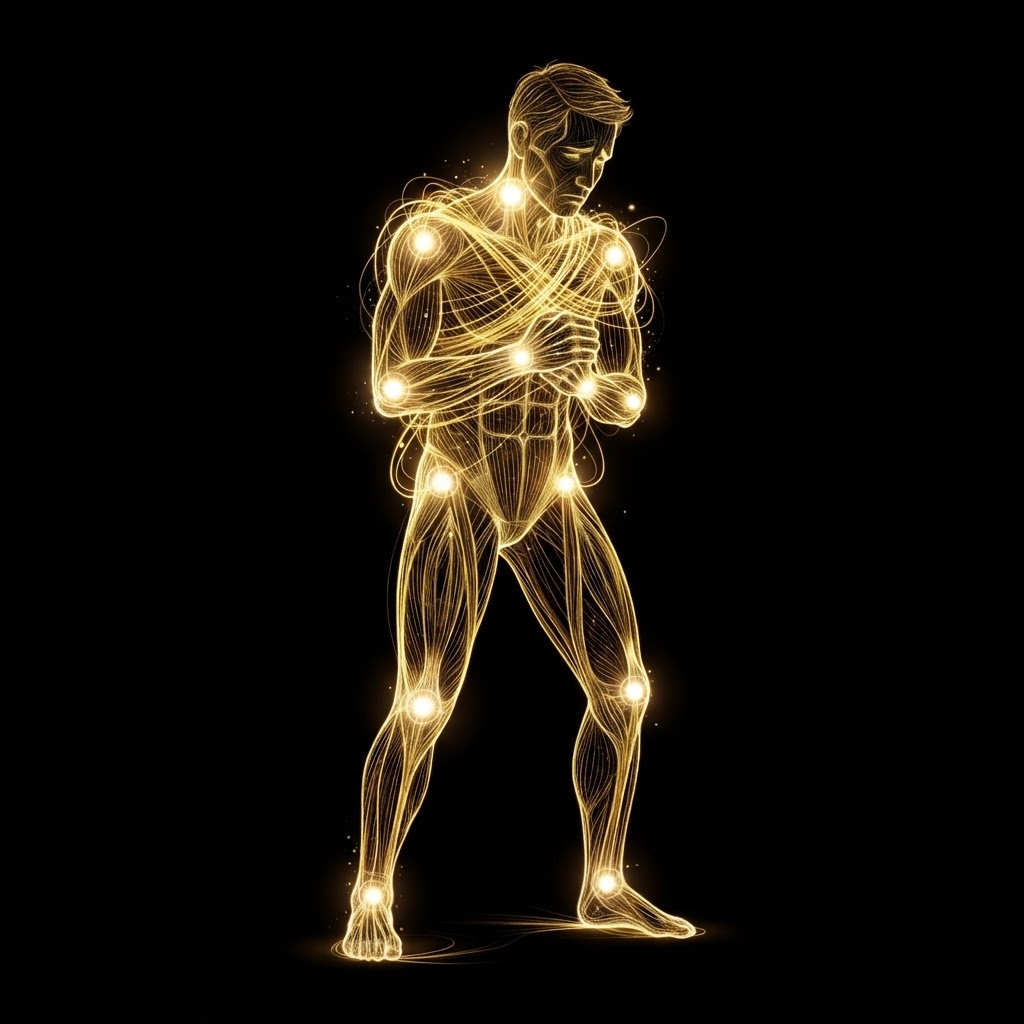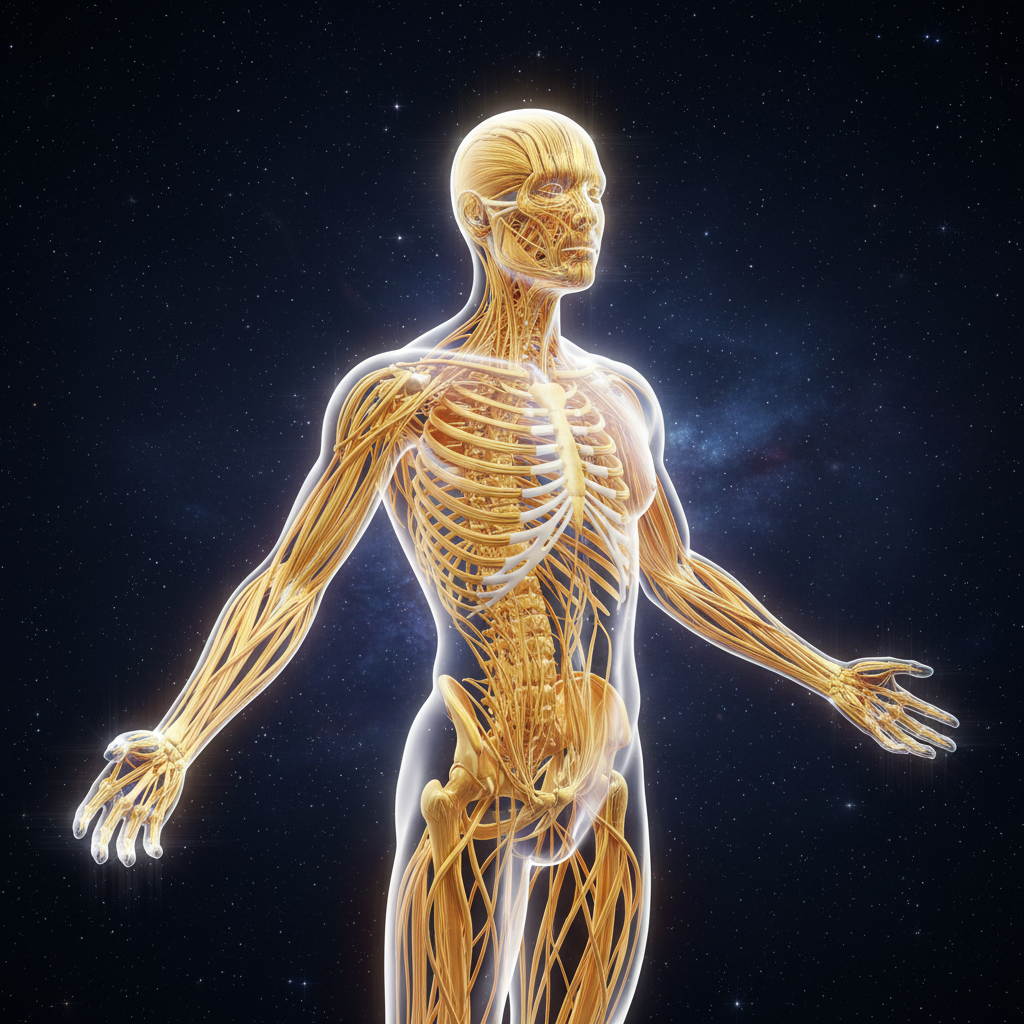
Sometimes you don't know what to say.
Sometimes you don't know what to look for.
That doesn't mean there is nothing to measure.
I AM 900 starts by establishing what the body is doing now — before anything is asked of your ability to explain it.
WE DON'T ASK A SENSOR TO TELL US YOUR STORY. WE USE MEASUREMENT TO UNDERSTAND THE PHYSICAL RESPONSE HAPPENING NOW.
Why words aren't always the starting point
Some people arrive with a precise story: the date, the moment, exactly what changed. Others arrive with something far less defined — "I just don't feel right since it happened," or "I can't explain it, but I don't trust my body the way I used to."
Both are legitimate starting points. But only one of them needs to exist.
If the only way into an assessment were words, the second person would be stuck before it began. It is not. The body is producing an observable physical response right now, and physical responses can be measured.
Describing a changed pattern in words is hard. Recording it is not. When explanation is difficult, the starting question shifts from "what can you tell us?" to "what can we observe and measure?"
What a physical baseline gives us
A baseline is a recorded starting point — the relevant measurable signals captured before anything is changed. In practice this means pressure, how that pressure is distributed, angle and orientation, timing, and the movement response that accompanies them.
A baseline does three things:
- It states where the body currently is, in measurable terms.
- It gives every later measurement a fixed reference.
- It makes the eventual question "what changed?" answerable.
Without a baseline, later comparison is guesswork. With one, it is arithmetic.
What the Sensor Sling can measure
The I AM 900 Sensor Sling records distributed Sling pressure, sensor-zone response, angle and orientation, and how those change over time, where supported by the instrument configuration. A pressure mat records relevant ground and contact loading. Movement provides the physical context in which those measurements occur.
The vocabulary is deliberately specific: pressure, distribution, angle, speed, timing, sequence, repeatability, loading and movement response. What each of these records — and what it does not — is set out fully in What a Sensor Sling Can Measure — and What It Can't.
Why questions still matter
Sensors provide no context. Questions do.
"What happened?" "When did this start?" "What can you no longer do that you used to do?" — the answers give the measurements their relevance. The same measured pattern can have different relevance after a fall than after years of repetitive work. Measurement shows us what is happening now; context helps determine what questions to ask next.
The core distinction, and it holds everywhere in this system:
The Sensor Sling records physical measurements. Questions provide context. Neither should be presented as a substitute for the other.
Changing the input
Once the baseline exists, the practitioner introduces a change — a directed calibration or programme, delivered through the 900 Calibration System™. The input changes; the person, the measurement conditions and the instrument configuration stay comparable.
Why we retest
After the change, the comparable measurement is repeated. The retest is not a new story and not an impression — it is the same measurement taken again, so the two can be placed side by side.
One measurement is a moment. A baseline gives us a reference. A retest gives us a comparison.
What measurement can — and cannot — tell us
Measurement can show what the physical response is doing now, whether it changes after a change in input, and whether that change is consistent enough to be worth acting on. That is genuinely useful information — often the first useful information a person has had in a long time.
Measurement cannot tell us your story, retrieve a memory, or establish what an experience meant to you. Those are not failures of the instrument; they are outside what any physical measurement claims to do.
The closing concept
You don't need to know the answer before measurement begins.
Establish the baseline. Measure the response. Change the input. Retest. Compare what changed.
That sequence does not require a perfect explanation at the door. It requires a body — and every arriving person has one. Start at the Trauma Pathway, read how we measure it in full, or see how the measurement sits inside the wider method.