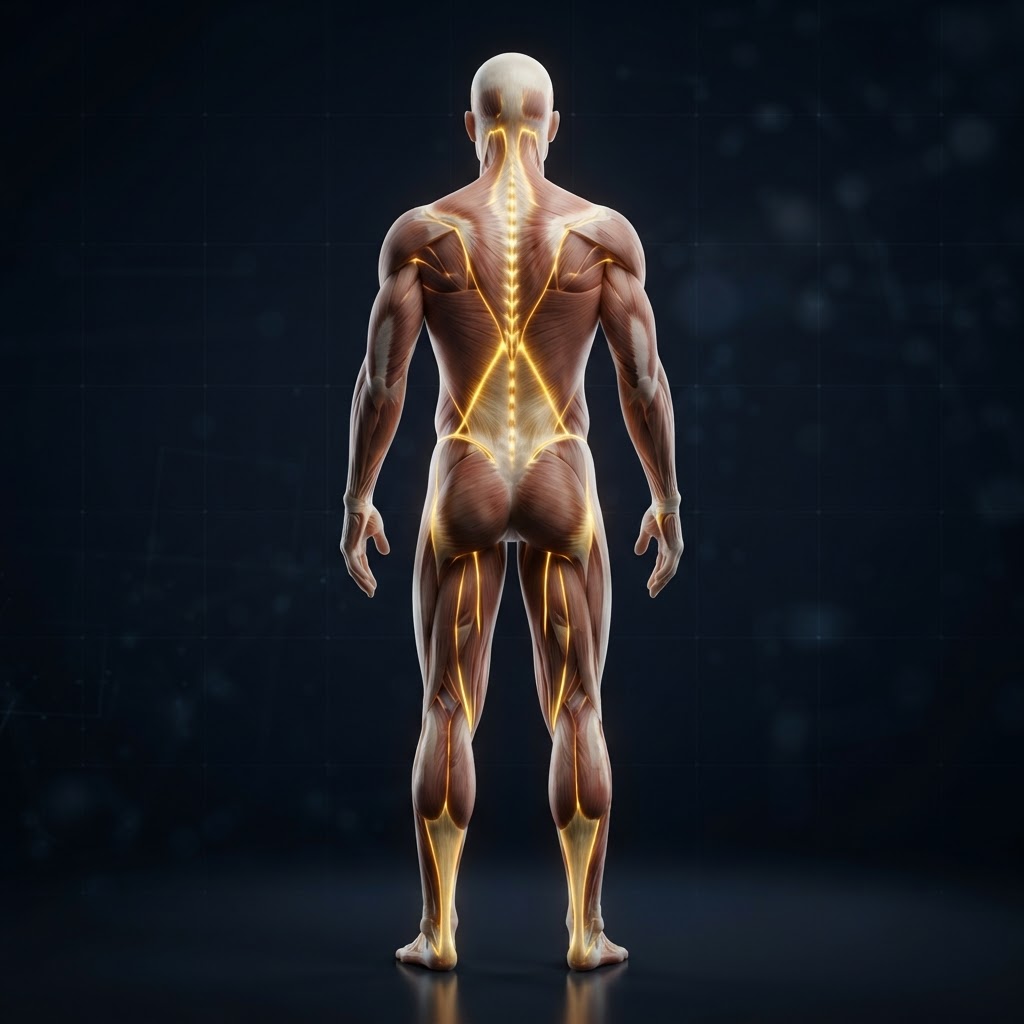
The word "calibration" is borrowed from engineering. Instruments get calibrated so their readings mean something. In I AM 900, the individual gets calibrated so the response can be measured, changed and measured again.
The Core Definition
Calibration changes a defined input or condition.
That is the whole mechanism. Between the baseline and the retest sits a deliberate, specific change — to the loading condition, to the movement task, or to the calibrated reference the individual works with.
The change is chosen so that the response can be measured again under the same defined task. Without the defined task, there is no comparison. Without the comparison, "calibration" is just a word.
What Calibration Is Not
Calibration is a measurement decision. It is specifically not:
Not a diagnosis. Calibration does not identify what is wrong. It changes an input and records what the response does.
Not guaranteed treatment. Not every change is an improvement. Calibration does not promise a result; it produces a comparison. What changed is recorded, not promised.
Not injury prediction. A calibration record does not forecast who will get injured. Measurement describes the response — it does not predict the future.
Not psychological interpretation. Calibration works with the physical response and the person's own report. It does not interpret emotion, psychology or trauma.
The Sequence
BASELINE → MEASURE → CHANGE THE INPUT → RETEST → COMPARE
- the baseline establishes the starting reference — the physical response during a defined task, plus what the person reports
- the input changes in a defined, deliberate way
- the retest repeats the same task under sufficiently comparable conditions
- the comparison records the delta — the measurable difference
And critically: a difference between baseline and retest describes the response. It does not, by itself, prove why the difference occurred. That is why the cycle is repeated — consistent comparisons across repeated cycles build a record that means something.
How Calibration Applies Differently by Pathway
SPORT: the athlete's baseline is a performance-relevant movement task. Calibration changes the loading condition. The retest measures the response — and the comparison feeds the sport-specific performance response.
PAIN: the baseline holds two information sources side by side — what the person reports, and what is physically measured. Calibration changes a defined input. The retest measures both again, and the comparison reads them separately and together.
TRAUMA: the baseline records the observable physical response alongside the person and event context. Calibration changes the input under the same measured conditions. The retest and comparison record what changed.
One method. The same logic. The pathway changes what gets measured and why.