Tear Origins
The Tear Is the Scream.
The Whisper May Have Come First.
A tear is the visible event. But movement can show clues before tissue failure occurs. This page explores what may be happening around a specific tear, injury or pain area — and what I Am 900 investigates when observing the movement around it.
Back
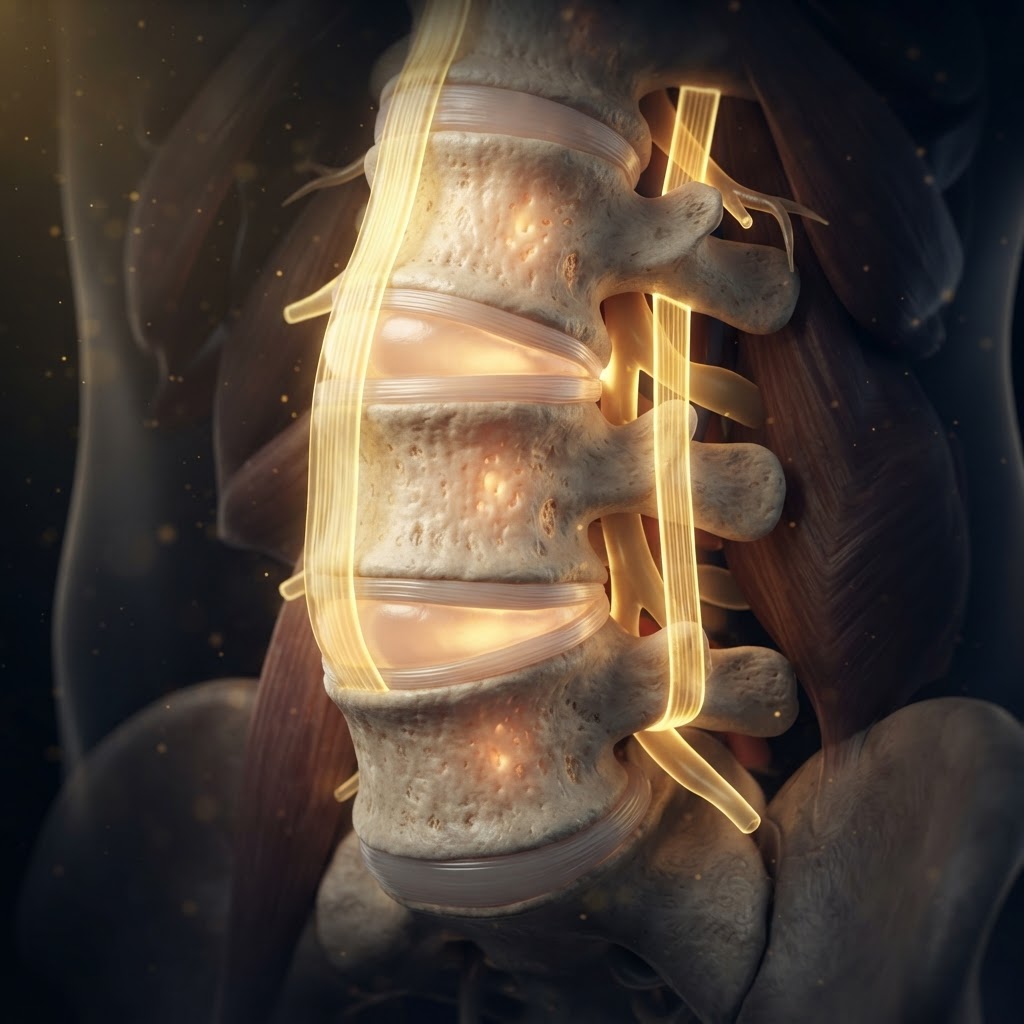
The pain is in the back. The reason isn't always simple.
What Can Happen
Back pain can have many contributors and should not be reduced to one movement pattern or one structure.
Loading, movement, injury, degenerative changes, sensitivity and other health factors can all play a role.
For movement assessment, I Am 900 asks a narrower question: what happens to the back when the rest of the body moves?
What Could Be Contributing
What I Am 900 Investigates
What was the body showing? We investigate the movement relationships relevant to this condition:
What We Measure
Selected measurements — including movement timing, pressure distribution under the foot, and observable movement response — are considered alongside what we observe. These measurements can be compared side-to-side and reassessed over time.
Calibration
Selected support or movement conditions can be altered and the movement response reassessed. This allows us to observe whether and how the movement changes — not to diagnose the cause, but to build a clearer picture of how the person moves.
Important Limit
This does not diagnose the source of back pain. It gives us another view of the person's movement.
Observations do not establish the medical cause of an injury or pain. They provide another view of the person's movement.