Why Barefoot Running Matters for Your Ligaments
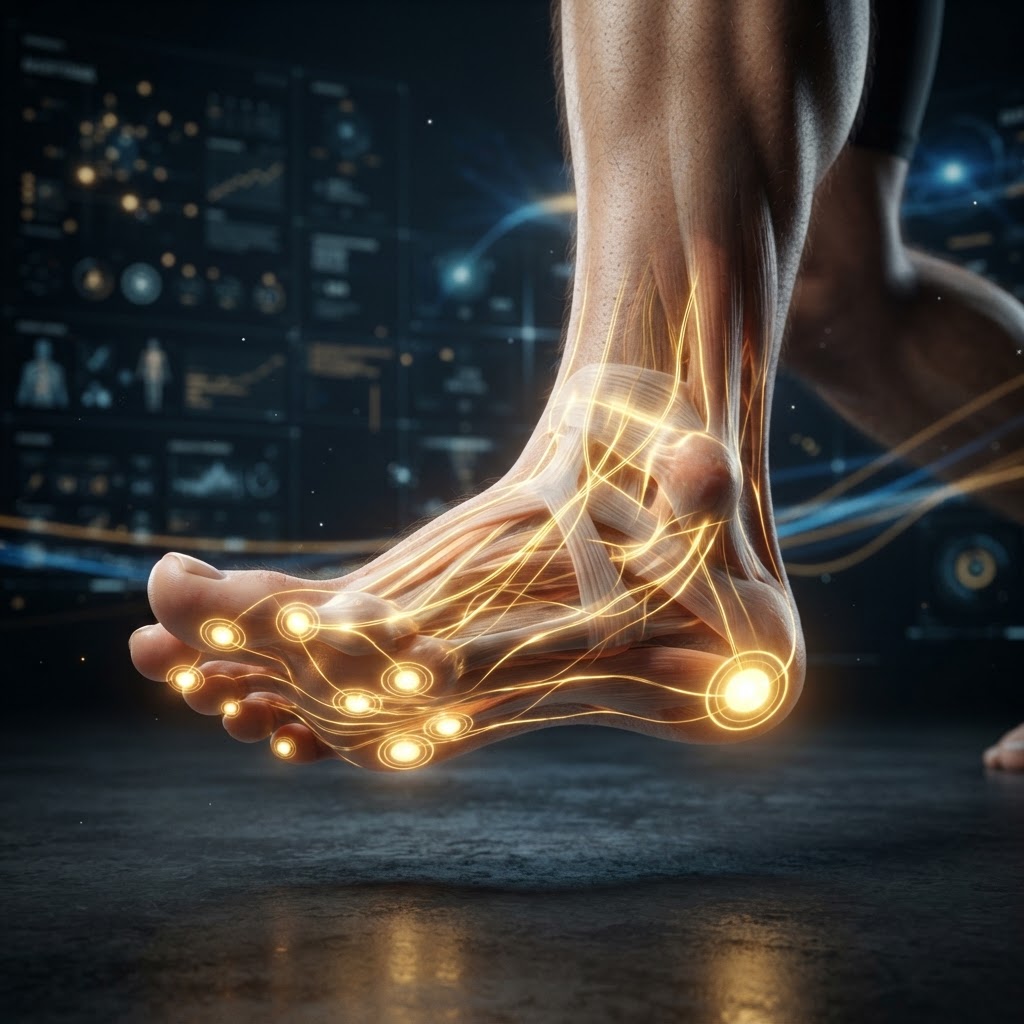
The human foot contains 26 bones and over 100 ligaments, forming one of the most complex mechanical structures in the body. Barefoot running engages this entire network in ways that cushioned shoes simply cannot replicate. When you run without the artificial support of modern footwear, every ligament in the foot and ankle is forced to stabilise, react, and adapt — building strength that translates directly to sports performance.
The Ligament Network of the Foot
The foot's ligament system can be divided into several functional groups:
- The plantar ligaments (plantar fascia, long and short plantar ligaments) form the arch's supporting cable system
- The spring ligament (plantar calcaneonavicular) supports the medial arch under load
- The interosseous ligaments connect and stabilise the midfoot bones
- The collateral ligaments of the ankle provide lateral and medial stability
How Barefoot Running Strengthens These Structures
When you run barefoot, your foot must manage every aspect of force absorption and propulsion independently. The plantar fascia acts as a bowstring, storing elastic energy on landing and releasing it on push-off. The spring ligament bears the full weight of the medial arch. The ankle collateral ligaments constantly make micro-adjustments to prevent rolling.
Over time, this sustained engagement produces measurable adaptations:
- Thicker, stronger plantar fascia that can store more elastic energy
- Enhanced ankle ligament proprioception — your brain knows where your foot is in space
- Stronger intrinsic foot muscles that support the ligament system
- Improved arch integrity that resists collapse under load
Performance Benefits for Sport
Athletes who incorporate barefoot running into their training consistently report:
- Faster sprint times due to improved elastic recoil
- Sharper cutting and change of direction
- Fewer ankle sprains and plantar fascia injuries
- Better ground contact and push-off mechanics
How to Start Safely
Transitioning to barefoot running should be gradual. Begin with 5–10 minutes of barefoot walking on grass, then progress to short barefoot runs on soft surfaces. Your ligaments need weeks to adapt — rushing the process risks overloading the plantar fascia and Achilles tendon.
The I Am 900 Approach
Our system uses distal pressure sensors on the feet to read exactly how your foot's ligament network is performing during barefoot movement. This data reveals asymmetries, weaknesses, and opportunities for enhancement — guiding targeted work that delivers measurable performance gains.
Barefoot running is not just a training method — it is a return to the body's natural ligament conditioning system.
Sport Application — Running and Repeated Foot Contact
This is a measurement example, not a case study.
For running, acceleration, deceleration, landing and change of direction, relevant measurement concepts include pressure, ground loading, distribution, timing, sequence, repeatability and movement response.
Where used, pressure-mat data can describe ground and contact loading across repeated foot contacts — including left/right loading and changes in loading over time.
As always, the comparison is the athlete against their own recorded baseline: measure the response, change the input, retest the same defined task, compare what changed.
Pressure distribution describes how loading is organised. It does not predict injury.
What Should You Measure in Sport? sets out the measurement vocabulary.