There is no single measurement that explains an athlete.
Pressure tells you something.
Timing tells you something different.
Sequence adds another part of the picture.
Repeatability asks whether the response remains consistent when the task is repeated.
The important question is not:
"What is the one perfect metric?"
It is:
"Which measurements are relevant to the question we are testing?"
There Is No Single Perfect Performance Metric
No single measurement explains performance.
Different questions call for different measurements.
A total that answers one question can hide exactly what another question needs — which is why the measurement set is chosen to fit the task, not the other way around.
Pressure
Pressure records force distributed over an area of contact.
Within an appropriate Sensor Sling configuration, pressure measurements can show how the supported physical response is distributed through relevant sensor zones.
Pressure is a measurement.
Its meaning depends on the task and context in which it was recorded.
Pressure Distribution
Two measurements can produce similar totals while being distributed differently.
Distribution therefore adds information that a single total may hide.
Where supported by the measurement setup, comparing distribution across relevant sensor zones can help describe how the physical response is organised during the task.
Angle and Orientation
Angle and orientation provide another description of what is happening during movement.
They can be particularly useful when the same task is repeated before and after an input change.
The question is not whether one angle is universally "good" or "bad".
The question is whether the recorded response changed and whether that change is relevant to the performance question being tested.
Speed and Rate of Change
Where supported by the instrument configuration, the rate at which a recorded value changes can be described alongside the value itself.
A recorded value and how quickly it changes are different descriptions of the same task.
Speed, task demands and movement context all influence what is being recorded — numbers should not be detached from the conditions under which they were produced.
Timing
Performance is not only about how much force or pressure appears.
When something happens can matter.
Timing can therefore provide useful context when comparing repeated movement tasks.
Sequence
So can the order in which measurable events occur.
Sequence adds another part of the picture — particularly when the same task is performed before and after an input changes.
Repeatability
One successful repetition does not necessarily describe a stable response.
Repeating the task allows consistency to be examined.
Does the athlete reproduce a similar pattern?
Does the response vary?
Does it become more or less repeatable after an input changes?
Repeatability turns a snapshot into a more useful comparison.
Ground Loading and the Pressure Mat
Pressure-mat measurement is separate from Sensor Sling measurement.
Where used, pressure-mat data may describe relevant ground and contact loading — including left/right loading, pressure distribution and changes in loading over time.
Pressure-mat data describes contact with the ground or another surface. It does not replace the Sensor Sling's own pressure record, and it does not imply that the mat is the only pressure source in an assessment.
Why Measurements Need Movement Context
Measurements do not occur in isolation from movement.
Speed, task demands and movement context influence what is being recorded.
That is why numbers should not be detached from the conditions under which they were produced.
A measurement only becomes useful when the question, task and comparison are clear.
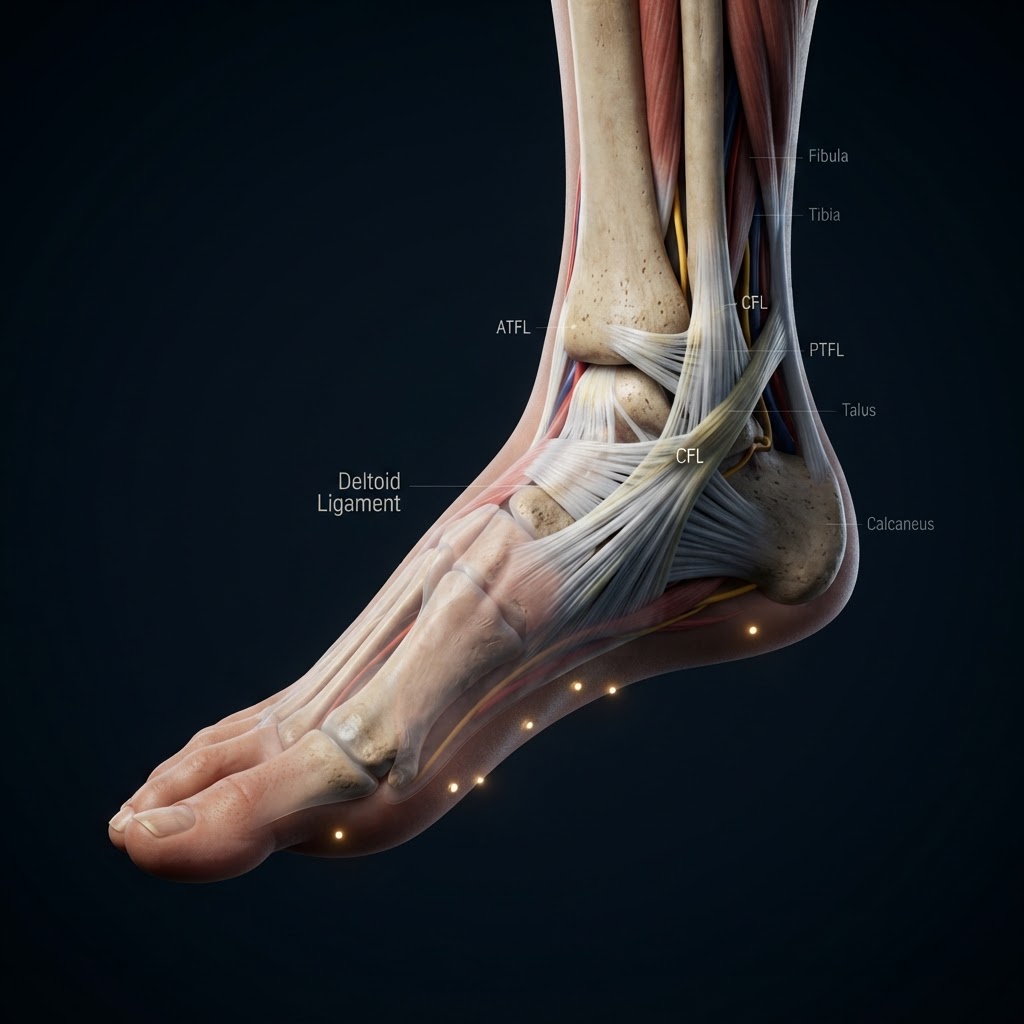
The ligament-side application of these measurements is set out in the sport applications within cutting and changing direction and MCL and LCL lateral stability.
Measure What Answers the Question
I AM 900 does not collect data simply because a sensor can produce it.
The measurement should serve the assessment.
Define the question.
Establish the baseline.
Record the relevant response.
Change the input.
Retest.
Compare.
The goal is not more data.
The goal is better comparison.
Pressure.
Distribution.
Angle.
Timing.
Sequence.
Repeatability.
Different measurements.
One purpose:
understand what changed.