
If you have ever fixed a pain, felt it go, celebrated, and then watched it crawl back weeks or months later — this article is for you. The pain came back because the thing you fixed was never the source. It was the symptom. The source is a chain, and until you read it, the pain will return.
Pain Is a Signal, Not a Location
Conventional pain management treats the site of pain as the problem. A sore lower back gets massaged. A stiff neck gets stretched. An aching knee gets iced and strengthened. The pain dulls. Life resumes. And then, predictably, the pain returns — often worse, often somewhere new.
This happens because pain is not a location. Pain is a signal. It is the nervous system reporting that a structure somewhere in the chain is under load it cannot sustain. The place you feel the pain is rarely the place that is failing. It is simply the place the load has accumulated — the joint, the muscle, the tendon that inherited the work of a ligament that went quiet.
The Ligament Chain and the Signal
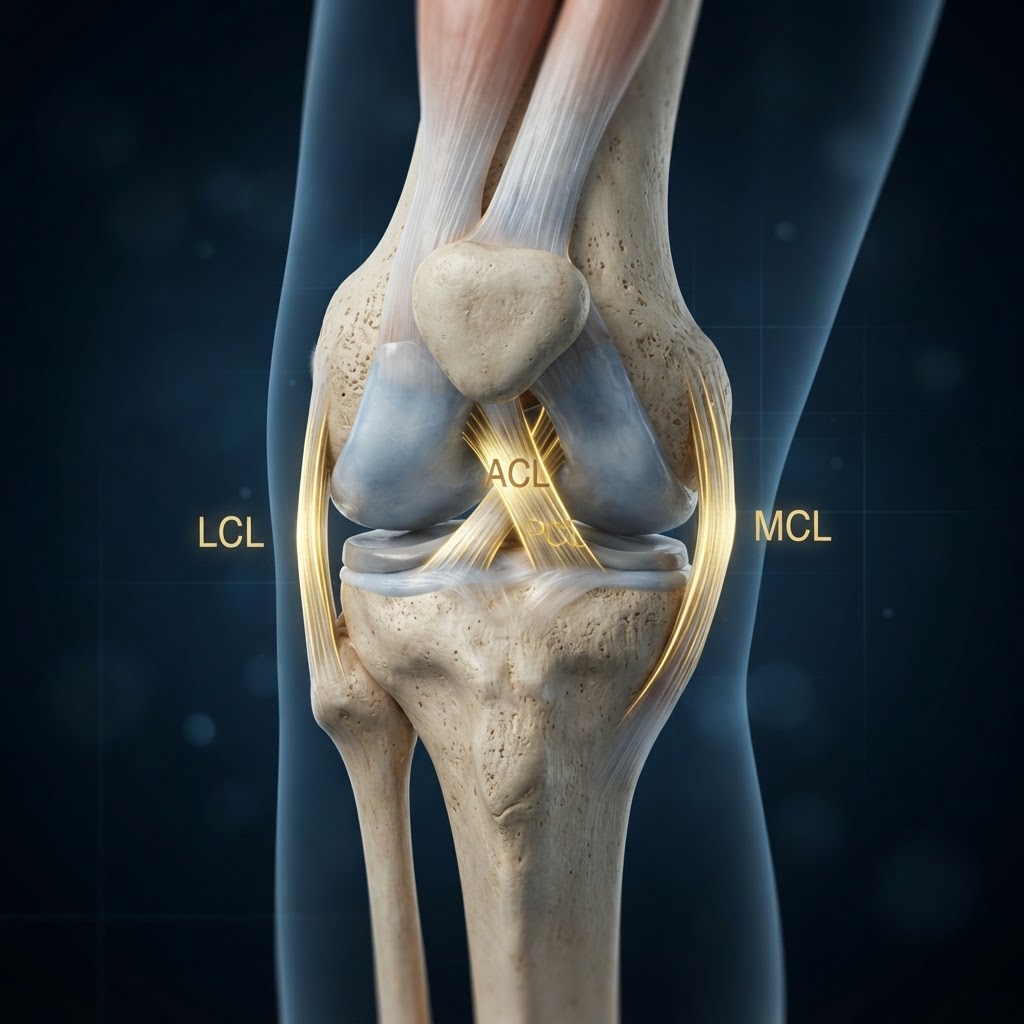
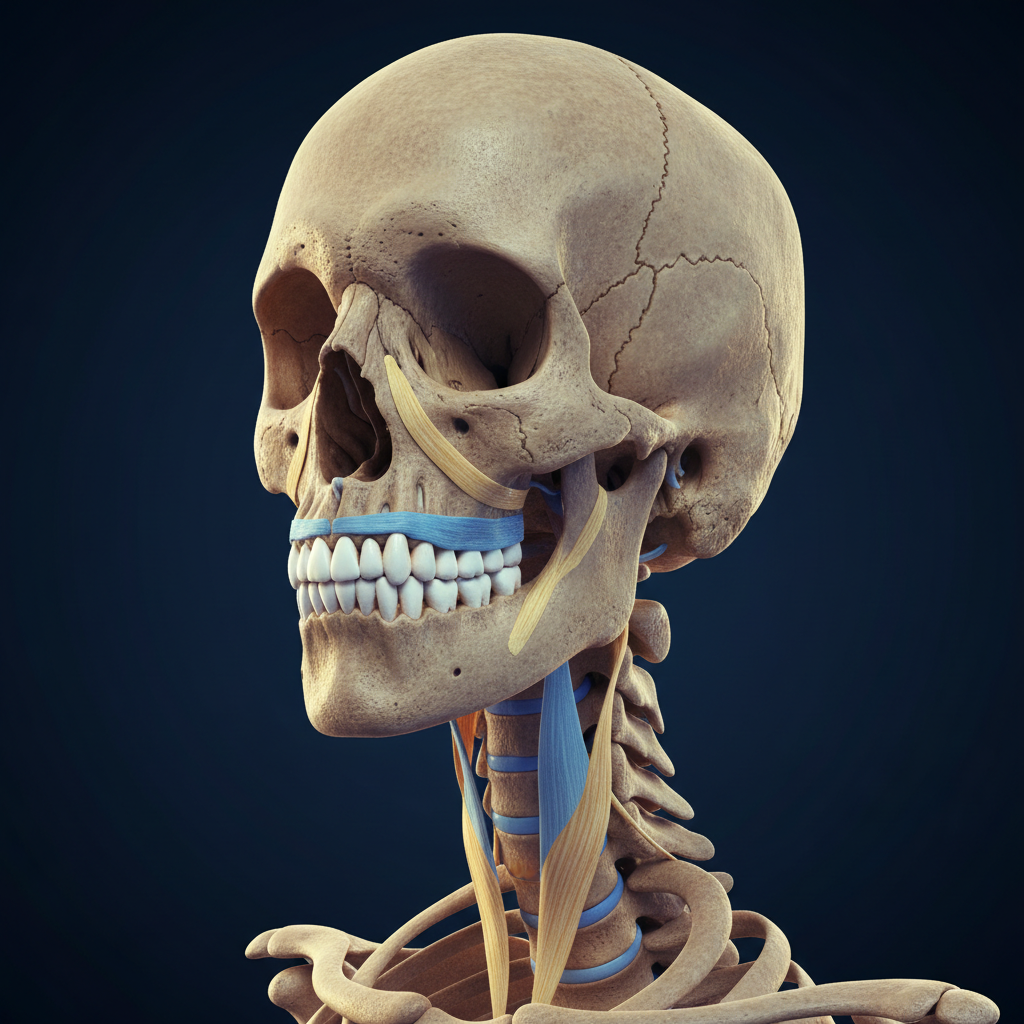
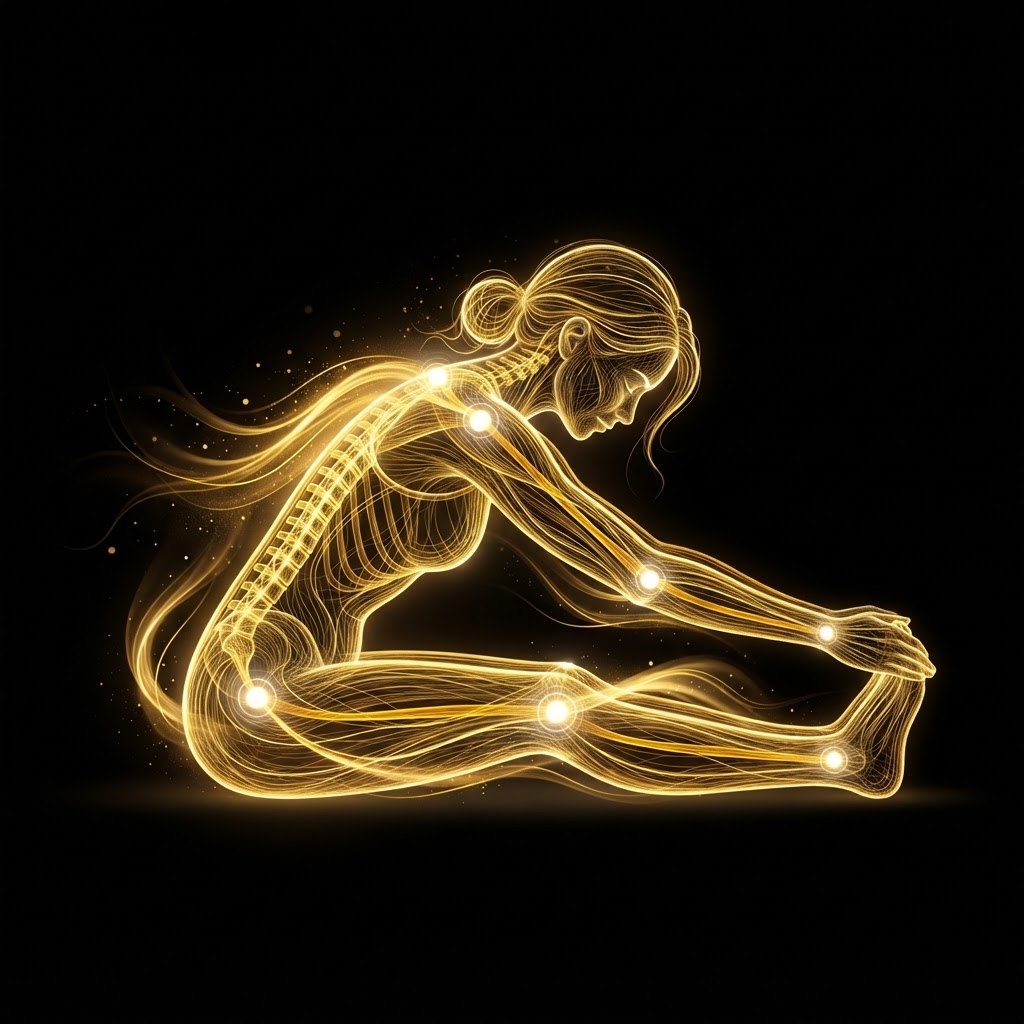
The human body is held together by 900 ligaments. They form a continuous chain from the arch of the foot to the Atlas at the base of the skull. Each ligament has a job: to hold a specific line so that force — the force of walking, running, lifting, even standing — travels through the body along the path it was designed to take.
When a ligament is healthy, it holds its line silently. You do not feel it. When a ligament loses its tension reference — through injury, scarring, prolonged poor posture, or neurological shutdown — it stops holding. The force that was supposed to pass through it reroutes. The body, brilliantly and desperately, recruits neighbouring structures to carry the load. Those structures were not built for it. They complain. That complaint is pain.
This is why chronic pain moves. The knee hurts, so you change how you walk. The hip takes the extra load. The hip starts to hurt. You shift again. The lower back picks up the slack. The back pain that sends you to the physio is the third stop on a chain that started in a ligament you never felt.
Why the Pain Keeps Coming Back
Every time you treat the site of pain, you quiet the signal. You do not fix the source. The leaking ligament is still leaking. The chain is still rerouting force through structures that were not designed to carry it. The moment you return to normal activity — walking, training, sitting at a desk — the load returns, the reroute resumes, and the pain comes back.
This is the cycle that keeps people in pain for years. It is not that the treatments are bad. It is that they are aimed at the wrong target. You cannot fix a chain problem by treating a single link. You have to read the whole chain, find the link that went quiet, and restore its line.
Reading the Chain
Reading the chain does not require imaging. It requires movement. The way a person walks, squats, reaches, and breathes tells the story of which ligaments are holding and which have gone quiet. A foot that flattens on contact is telling you the arch ligament has lost its line. A knee that collapses inward is telling you the ankle chain below it is leaking. A shoulder that hikes on a reach is telling you the cervical chain is holding tension the shoulder should not be carrying.
The I Am 900 system maps these signals across 23 structural checkpoints. Each checkpoint is a named ligament complex with a known leak pattern and a known compensation pattern. When you know the map, the body's pain story becomes legible. The site of pain is the last chapter. The source is always earlier in the chain.
The Mindset That Keeps the Chain Broken
There is a second reason chronic pain returns, and it is not structural. It is psychological. When pain has been present for months or years, the nervous system stops trusting the body. It guards. It tightens the muscles around the painful joint to protect it. That guarding is itself a load — a constant, low-grade tension that keeps the chain from ever settling back into its natural line.
This is why two people with the same structural leak can have completely different pain outcomes. One trusts the body, lets the guard down, and the chain recalibrates. The other holds the guard, and the chain stays locked in a tension pattern that guarantees the pain returns the moment the treatment stops.
Calibration is as much about teaching the nervous system to let go as it is about restoring the ligament's line. The chain cannot hold if the body will not allow it to.
From Signal to Silence
The path out of chronic pain is not to silence the signal. It is to read it. The signal is telling you exactly which link in the chain needs attention. The work is to find that link, restore its line, and let the force travel through the body the way it was designed to — silently, without complaint, without pain.
When the chain holds, the pain does not just dull. It stops. Not because you silenced it, but because you removed the reason it was speaking.
The I Am 900 system reads the ligament chain through 23 structural checkpoints. Request an assessment to find the link your pain has been pointing at.
What a Baseline Would Record
A narrative like this describes a pattern. A baseline records it. For recurring pain the process begins the same way as any other: establish a baseline before trying to change pain, record what the person reports and what the movement produces, then retest and compare. The I AM 900 Pain Pathway sets out the full sequence.