The Lie of the Sudden Injury
"It just went." Every clinician hears it. The hamstring that tore on a routine sprint. The back that seized picking up a shoe. The shoulder that dislocated reaching overhead. Patients swear it was sudden — one moment fine, the next broken. Twenty years of clinical work and a lifetime of studying how force actually travels through a living body have taught me a different truth: there are no sudden injuries. There are only quiet ones we refused to hear.
The Chain Is Always the Story
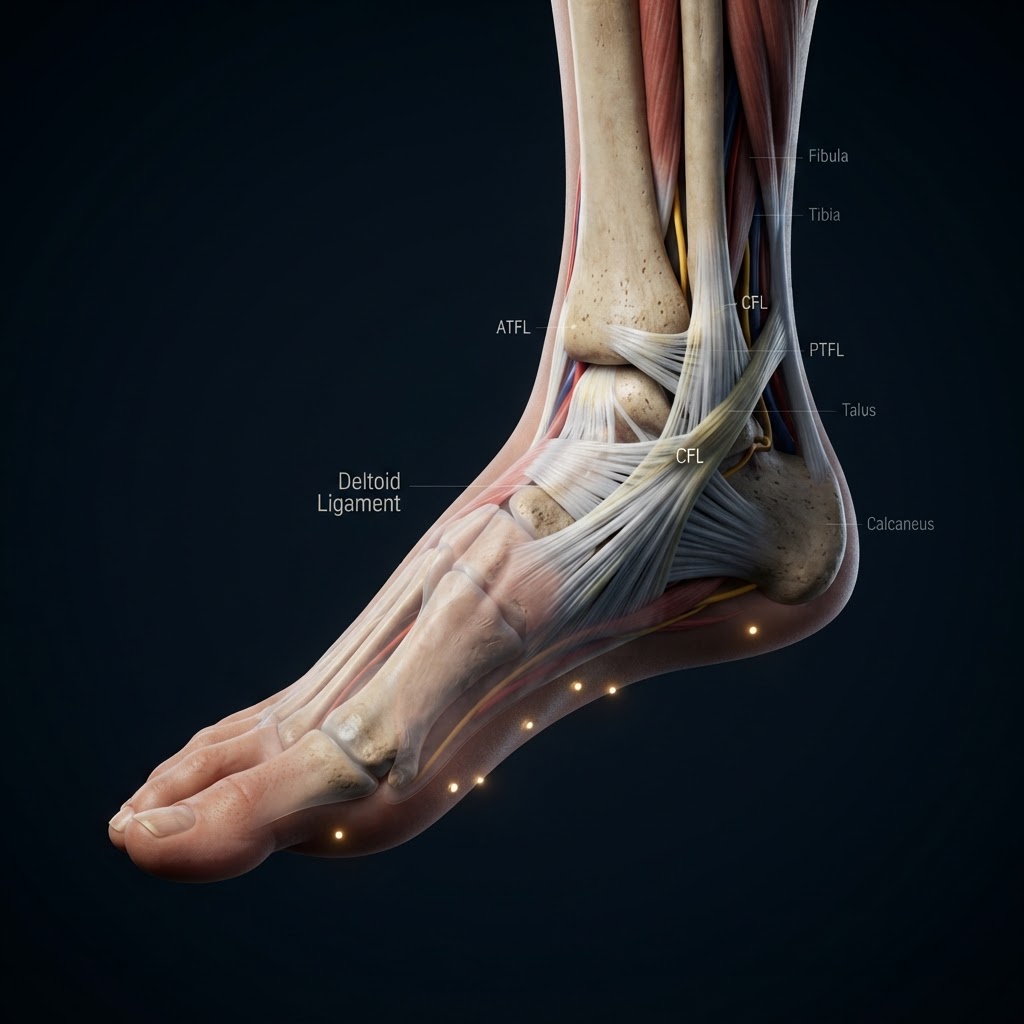
No ligament fails alone. Every joint sits inside a chain — foot to knee to hip, pelvis to spine to shoulder — and force passes through that chain like current through a wire. When one link is silent, stretched, or misaligned from an old injury nobody ever properly restored, the current does not stop. It finds the next weakest point and loads it until it gives. The tissue that tears is always the last voice. The chain had been whispering for months, sometimes years.
Why the Medical Eye Always Misses It
Scan the torn hamstring and you see the tear. Scan the ruptured ligament and you see the rupture. The image is true and the conclusion is false — because the scan shows the voice that finally screamed, not the chorus that had been whispering down the chain. You repair the tear, the athlete returns, and within a season the same chain breaks again, often at a new point. This is why isolated treatment fails and why the same injuries recur in the same people.
What Twenty Years Taught Me to Listen For
The whispers are measurable. A latency delay — the fraction of a second between perturbation and protective reflex — appears long before pain. A force-plate asymmetry shows up weeks before a tear. A joint that can no longer find its own position in space signals a ligament that has lost its voice. The body is never silent. We are simply not listening at the right frequency.
The Work Is Not Repair — It Is Restoration
Fixing the tear is the easy part. The work that lasts is restoring the entire chain so the current flows clean again and no single link is left to carry the load alone. Measure the chain. Find the silent ligament. Restore its tension and reflex. Retrain the whole path under real speed. This is the difference between a career of recurring injuries and a body that stops breaking.
The injury is never where it hurts. It is where the chain went silent. Listen for the whisper, and you may never have to hear the scream.