The Shoulder: The Most Mobile and Vulnerable Joint in Sport
The shoulder joint has the greatest range of motion of any joint in the body — and that mobility comes at the cost of stability. In contact sports like rugby, football, and GAA, the shoulder's ligament network is constantly tested by impacts, falls, and reaching movements.
The Glenohumeral Ligaments
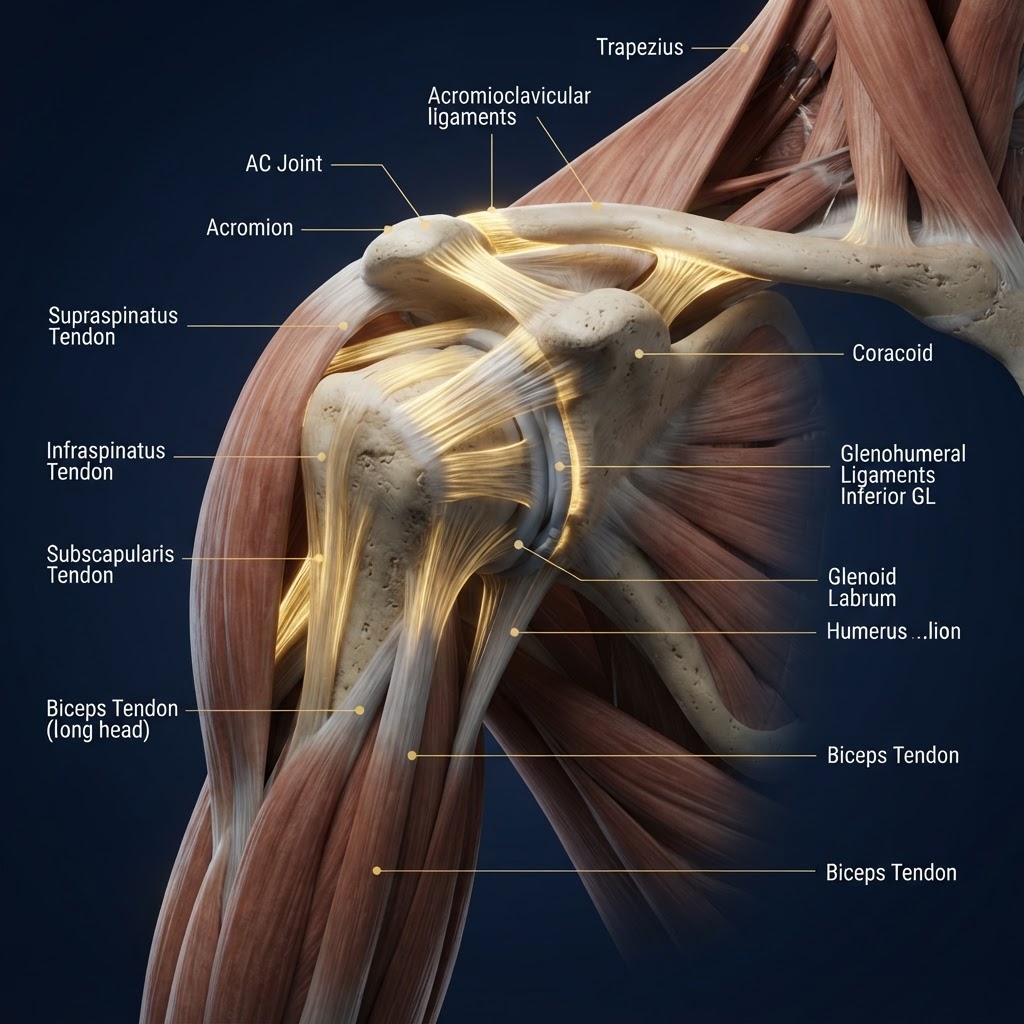
The glenohumeral joint (the ball-and-socket of the shoulder) is stabilised by three ligamentous bands on the front of the joint capsule:
- Superior glenohumeral ligament (SGHL) — resists inferior translation (downward dislocation) in the adducted arm
- Middle glenohumeral ligament (MGHL) — resists anterior translation in mid-range abduction
- Inferior glenohumeral ligament (IGHL) — the primary anterior stabiliser in abduction and external rotation (the position of throwing and tackling)
The IGHL is the most important of the three for athletes. It forms a hammock beneath the humeral head when the arm is in the abducted, externally rotated position — exactly the position of a rugby tackle, a hurling strike, or a gymnastic hang.
The AC Joint Ligaments
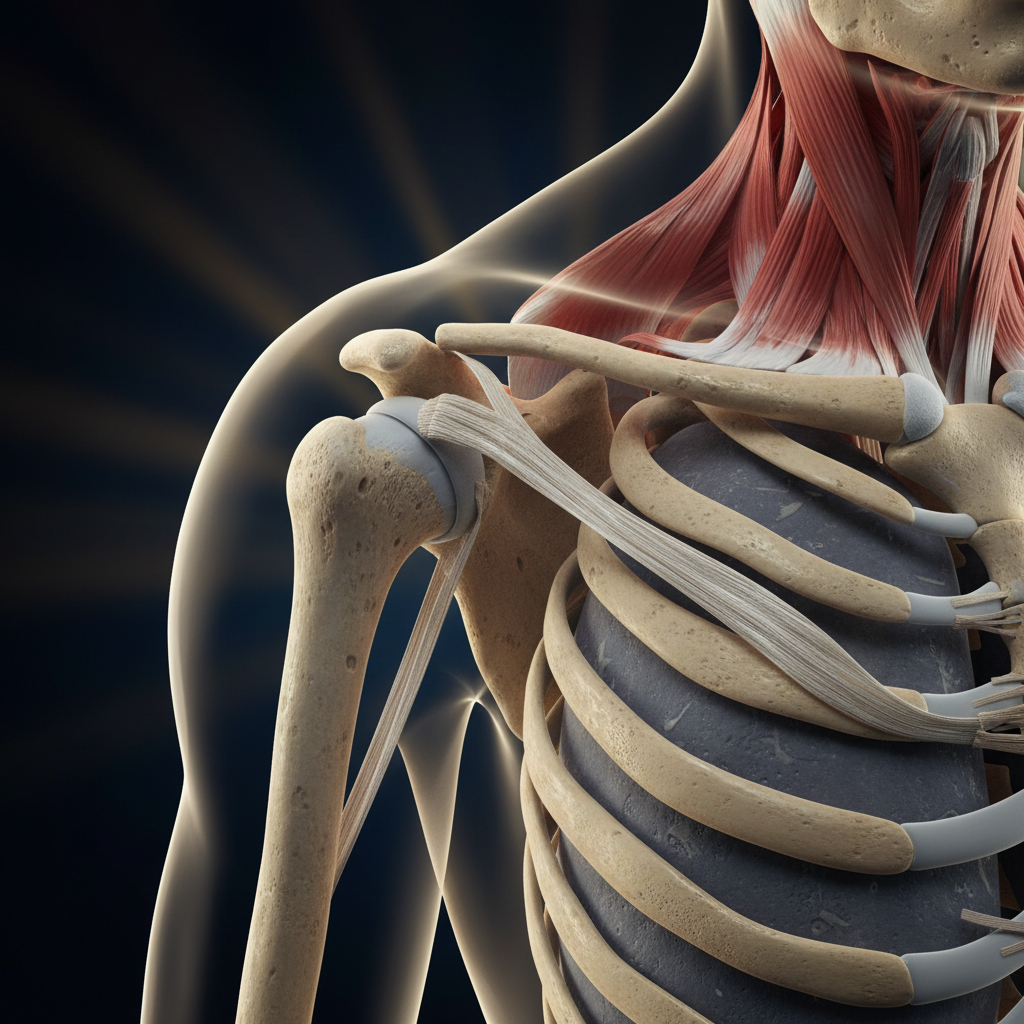
The acromioclavicular (AC) joint sits at the top of the shoulder and is stabilised by:
- AC ligament — capsular ligament controlling horizontal stability
- Coracoclavicular (CC) ligaments (conoid and trapezoid) — vertical stability, prevent the clavicle from rising
AC joint injuries ("separated shoulder") are among the most common in contact sport, caused by falls onto the point of the shoulder or direct impact.
How Shoulder Ligament Injuries Occur
Anterior dislocation — typically when the arm is forced into abduction and external rotation beyond what the IGHL can resist. Common in rugby tackles, hurling falls, and gymnastic dismounts.
AC joint separation — falls onto the shoulder drive the scapula downward while the clavicle stays put, stressing or tearing the AC and CC ligaments.
Labral tears (SLAP lesions) — repetitive overhead motion stresses the biceps-labral complex, which works alongside the glenohumeral ligaments.
Which Sports Are Most at Risk?
- Rugby — tackling and being tackled, falls to the ground
- GAA and hurling — striking, hand-passing, collision, falling
- Gymnastics — weight-bearing through the shoulder in extreme positions
- Football — goalkeeping dives, falls
Enhancing Shoulder Ligament Stability
Shoulder ligament enhancement focuses on:
- Rotator cuff strength — the dynamic stabilisers that protect the ligaments
- Scapular control — a stable base reduces ligament stress
- Proprioceptive training — the shoulder's awareness of position under load
- Progressive loading — resistance through the full range builds ligament tensile strength
The I Am 900 Approach
Our sling system maps tension across the shoulder's full ligament and muscular network during throwing, reaching, and loading movements. By reading how the glenohumeral and AC ligaments share load, we identify the weak points that lead to injury and the enhancement opportunities that improve performance.
The shoulder's ligaments are the difference between a stable, powerful upper body and a joint that gives way under pressure. Understanding them is the first step toward bulletproofing the shoulder for contact sport.