Shoulder Pain and Movement: Pressure, Angle and Sequence
The shoulder works as a sequence, not a single joint — which is why a measurement-led view of shoulder pain starts with how the movement is organised, not only where it hurts. Throughout this article the two tracks stay separate: the pain score is the person's reported experience; the physical measurement is what the instrument records. Neither automatically explains the other, and both can be compared between baseline and retest.
Start With the Baseline
The baseline is a defined movement task — a repeated overhead reach, a lift, a carry — performed the same way each time. Two records are made: how the person reports their pain during the task, and how their body currently moves through it. The person becomes their own comparison. See Why Establish a Baseline Before Trying to Change Pain?
What Can the Sensor Sling Measure?
The I AM 900 Sensor Sling records supported physical measurements at Sling measurement locations. Where the instrument configuration supports it for the task:
- Sling pressure and pressure distribution — distributed pressure recorded at relevant Sling measurement locations, and how it is distributed across them through the movement.
- Angle / orientation — orientation information supported by the sensor configuration.
- Timing and sequence — when measurable events occur, and the order in which they occur. In overhead movement the sequence is often where the task is most characteristically individual.
- Rate of change — where supported, the rate at which a recorded variable changes.
- Repeatability — how consistently the recorded response appears across comparable trials.
What Measurement Does Not Diagnose
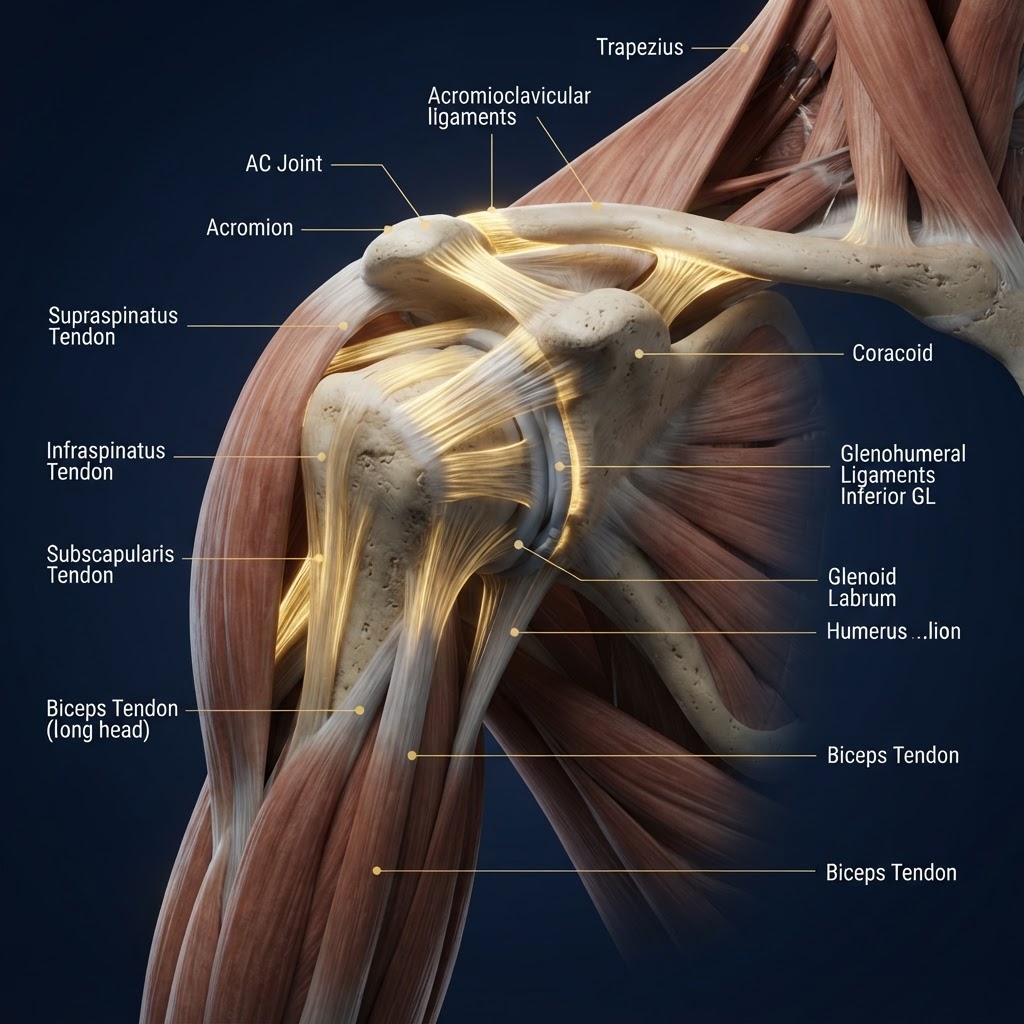
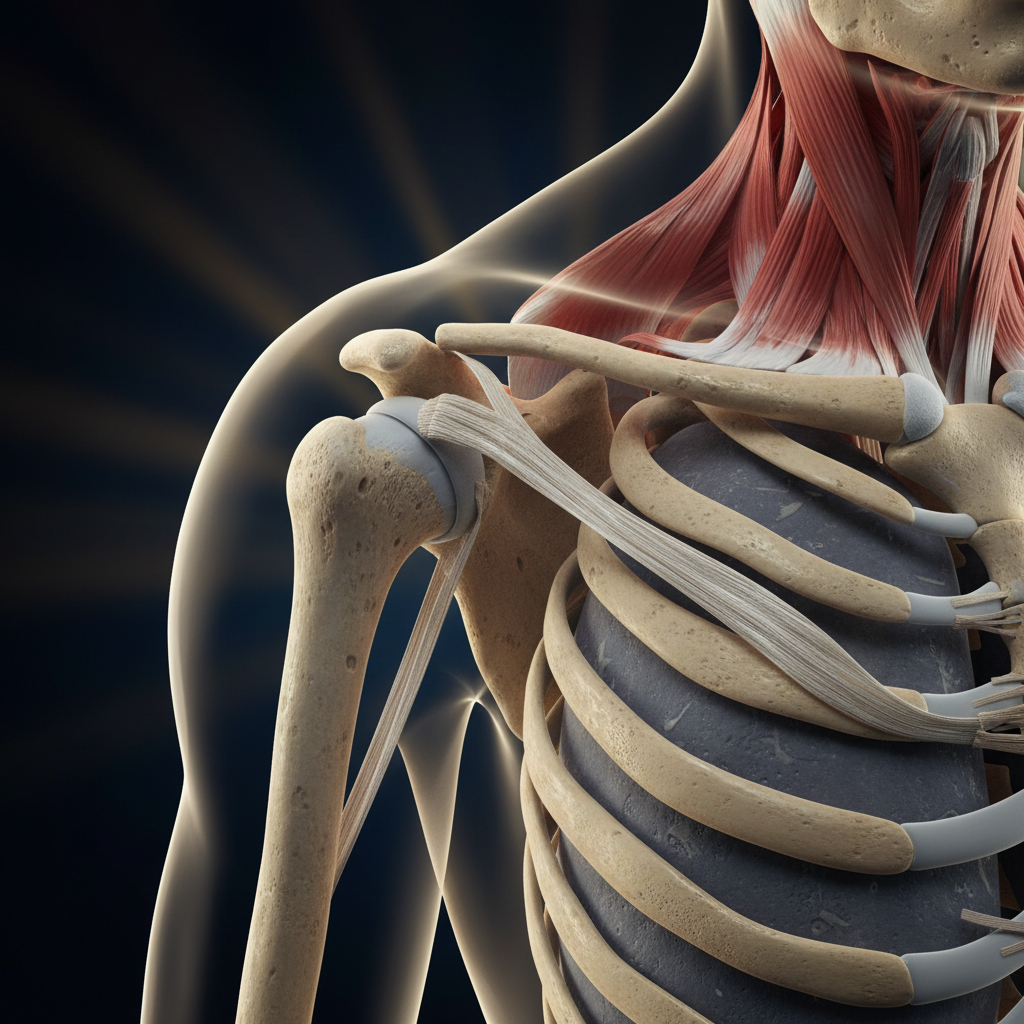
Recorded pressure, angle, timing or sequence do not diagnose rotator-cuff tears, impingement, labral pathology or tendinopathy, and they do not identify the biological source of pain. The measurement records the physical response. For the anatomy and condition context, see Shoulder Impingement Syndrome: Why Your Shoulder Pinches, Frozen Shoulder and Shoulder Pain and the Ligament Chain. Diagnostic questions belong with qualified clinical assessment, which remains a separate process.
Change the Input, Retest, Compare
Calibration applies a defined, practitioner-directed change to the input or conditions of the task (what calibration means). The same task is then repeated under the same conditions, and the retest is compared with the baseline on both tracks: the reported pain and the physical measurement. The difference is information about the response — it does not by itself establish why anything changed, and it is not a guarantee of pain improvement.
Where This Fits
The pain pathway — including recorded outcomes — is at /pain; the method at /method; the calibration process at /calibrate; the instrument at I AM 900 Sensor Sling. Related reading: Pain Score vs Physical Measurement and Using the I AM 900 Sensor Sling to Measure Physical Response.