The Shoulder Isn't an Island
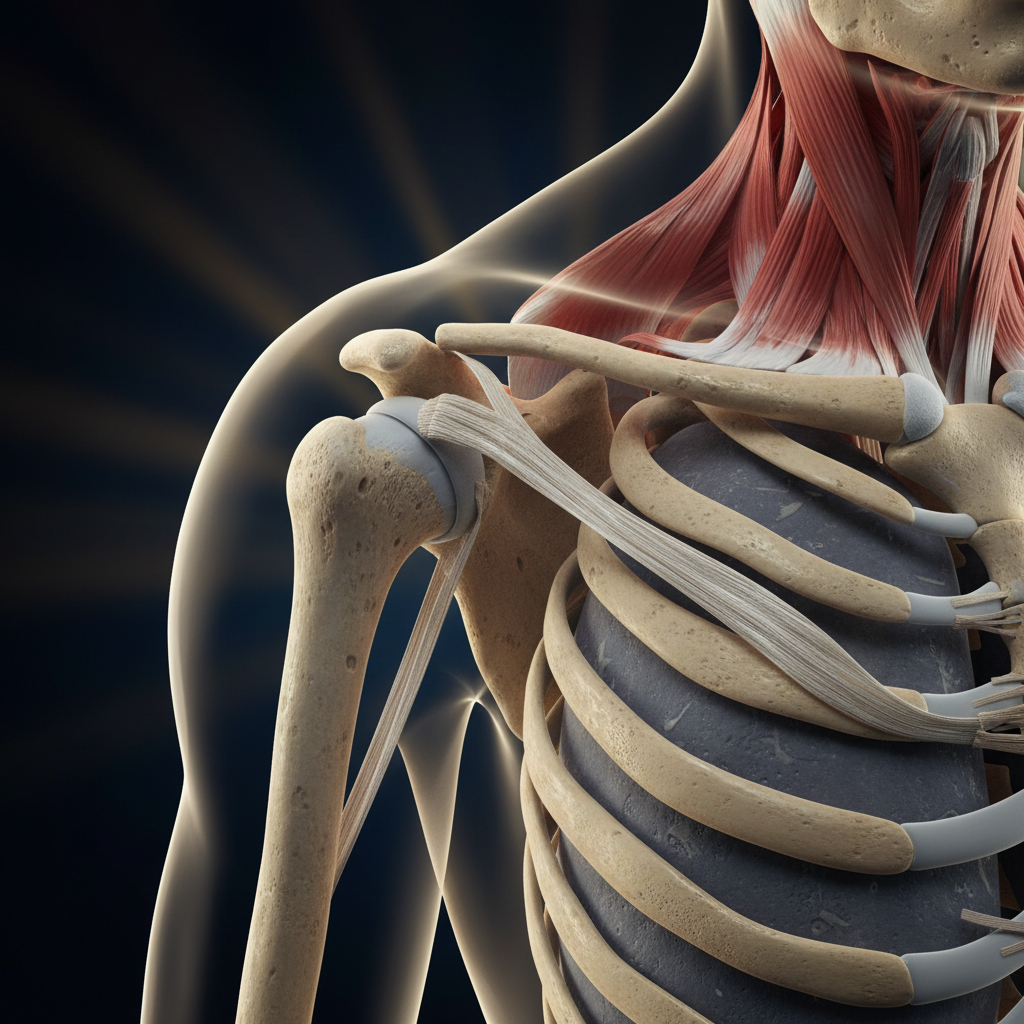
When your shoulder hurts, it's natural to focus on the shoulder. But the shoulder is part of a continuous chain — from your neck, through the shoulder blade, down the arm, to the fingertips. Pain in one part of this chain often originates in another.
The Chain Explained
The Neck
Your cervical spine connects to your shoulder via a network of muscles and ligaments. Tightness in the neck — common in anyone who sits at a desk or drives — directly affects shoulder mechanics. The nerves that control your arm pass through the neck, so cervical tension can manifest as shoulder pain, arm tingling, or even hand weakness.
The Shoulder Blade
The scapula floats on the ribcage, connected by muscles that stabilise it. If the scapula isn't moving properly, the shoulder joint bears extra load. Many "shoulder problems" are actually scapular problems.
The Rotator Cuff
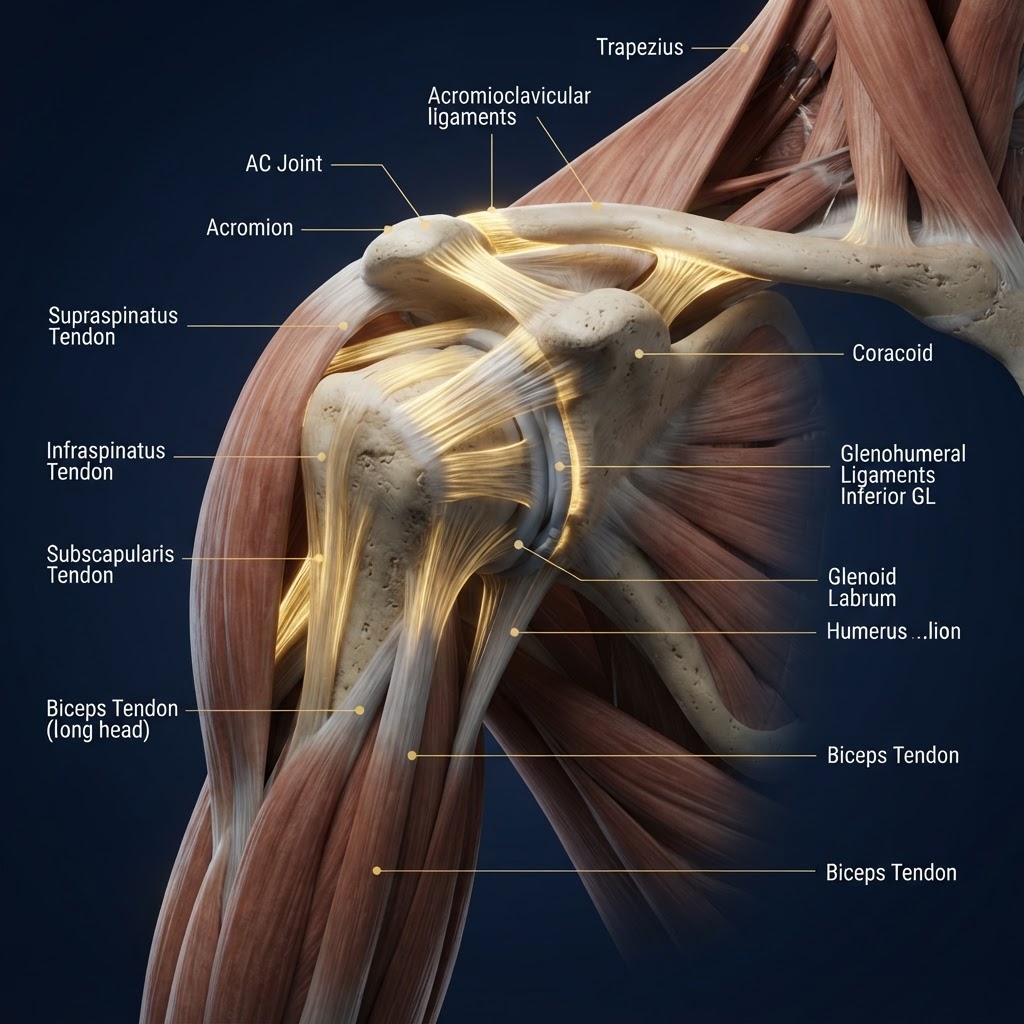
Four small muscles and their tendons keep the shoulder joint centred. When they're overworked, underworked, or imbalanced, the joint tracks poorly, leading to impingement and inflammation.
The Elbow and Wrist
Tension in the forearm and wrist travels upward. Grip-heavy activities — carrying, lifting, hurling — create forearm tension that feeds into shoulder mechanics.
Finding the Source
The metacognitive approach to shoulder pain is to trace the chain before treating the symptom:
1. Check the Neck
Can you turn your head fully to both sides without pain? Is one side stiffer? Neck restriction is a common hidden cause of shoulder pain.
2. Feel the Blade
Stand against a wall and slowly raise your arms. Does one shoulder blade move differently? Does one side click or catch? Asymmetry in the scapula often drives shoulder pain.
3. Test the Forearm
Squeeze your fist and notice whether tension travels up to your shoulder. If it does, your forearm is part of the chain.
The Irish Sporting Context
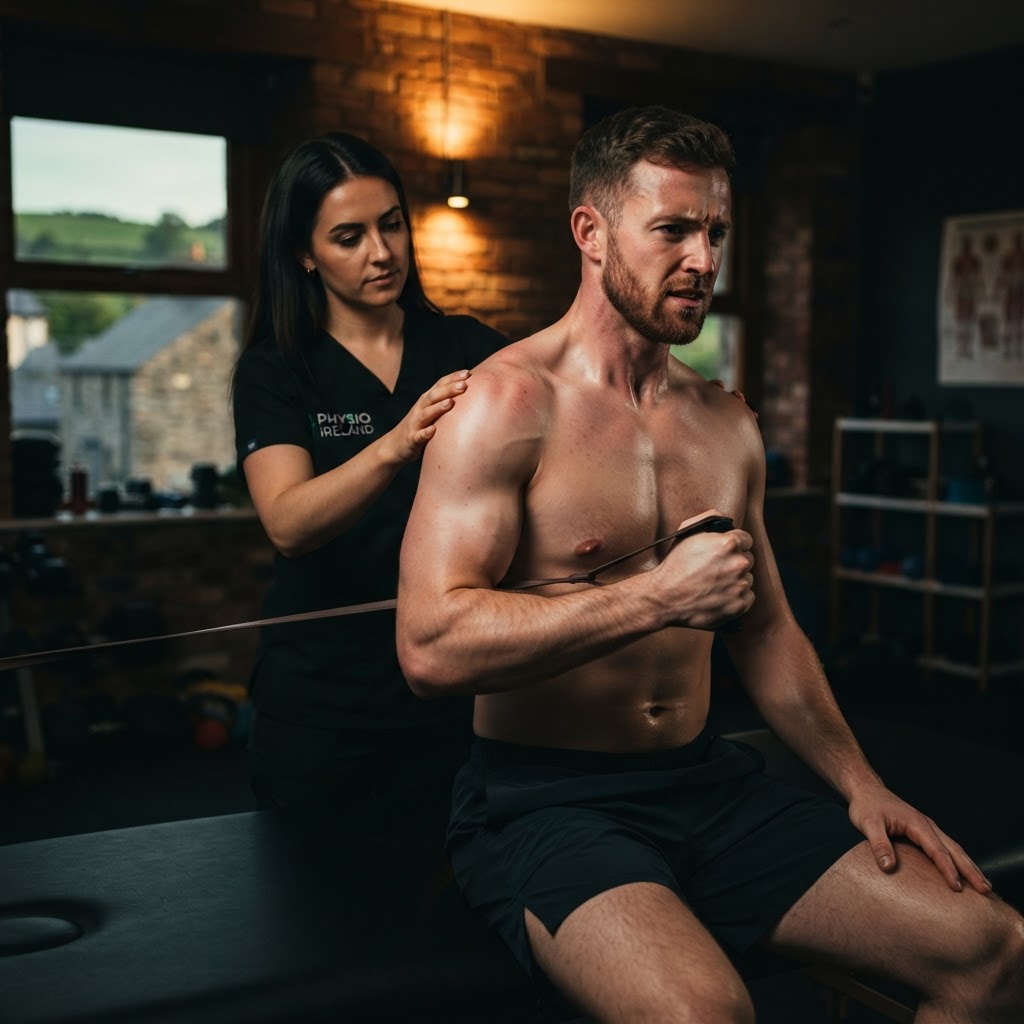
GAA and hurling demand asymmetric shoulder use — one arm throws, the other stabilises. Rugby involves tackling and rucking that loads the shoulder in every direction. Over time, these patterns create imbalances that, left unaddressed, become chronic pain.
Action Steps
- Neck mobility: Gentle neck rotations and lateral flexions, twice daily.
- Scapular mobility: Wall slides and shoulder blade squeezes, 10 reps, twice daily.
- Forearm release: Massage the forearm and stretch the wrist flexors and extensors.
- Chain awareness: After each activity, scan from neck to fingertips — where has tension settled?
The Shift
When you stop treating the shoulder as an isolated joint and start seeing it as part of a living chain, recovery becomes about restoring balance to the whole system. The pain will follow the awareness — upstream to its true source, and then out of your body entirely.