How Ligament Laxity Tricks the Brain Into Constant Muscle Spasms
If you've ever wondered why your muscles feel perpetually tight no matter how much you stretch, the answer is not in the muscle. It is in the ligament — and in the conversation your ligament is having with your brain.
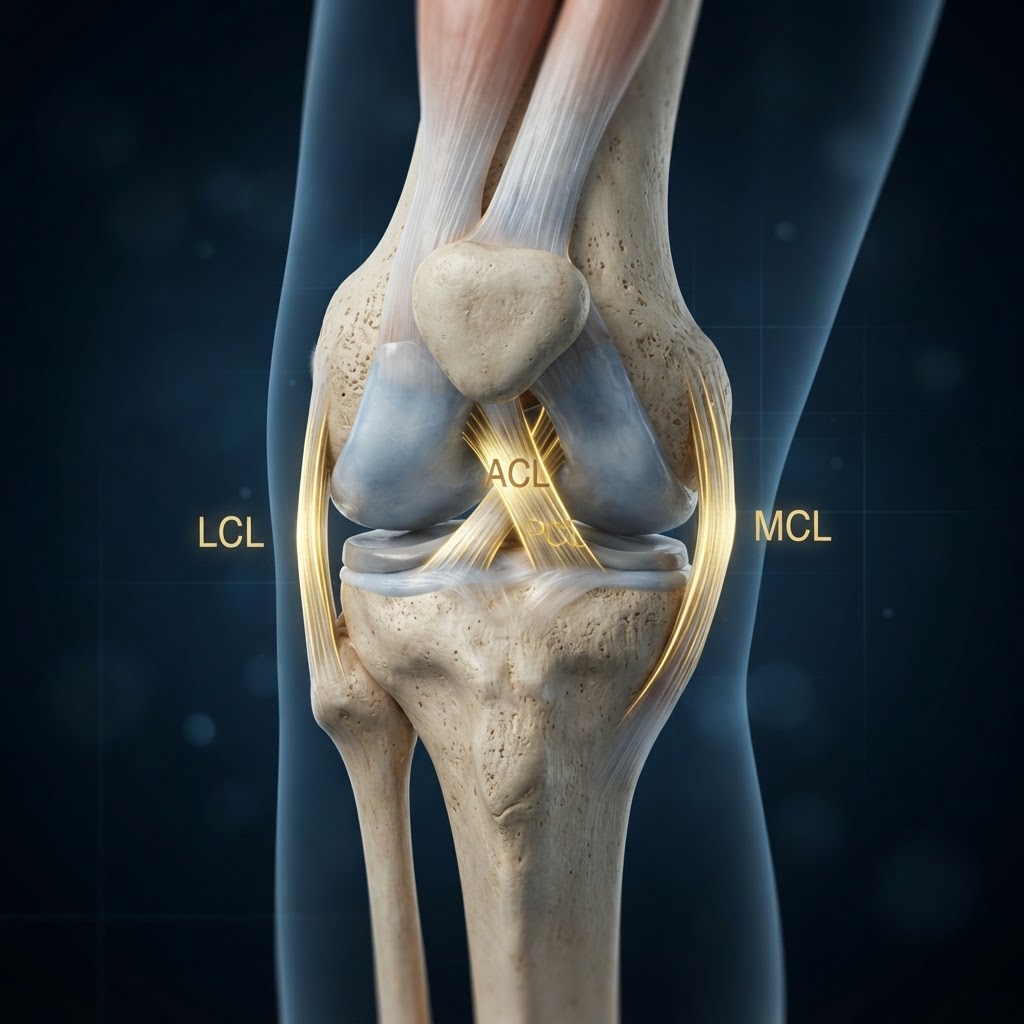
Ligaments are packed with mechanoreceptors — sensory nerve endings that report joint position, tension, and load to the central nervous system. When a ligament is healthy and properly tensioned, these receptors fire a clean signal: "the joint is stable, full power permitted."
When a ligament suffers micro-laxity, that signal changes. The receptors report instability. The brain responds the only way it knows how — by tightening the surrounding muscles to splint and protect the unstable joint. This is protective muscle guarding.
Why Stretching Makes It Worse
Here is the trap that keeps chronic pain sufferers spinning their wheels. The muscle tightness you feel is the brain's solution to an unstable joint. When you stretch the tight muscle, you remove the brain's protective splint — and the brain simply re-tightens it harder, because the underlying instability has not changed.
Stretching an unstable joint is like loosening the lug nuts on a wobbly wheel. It feels better for an hour. Then the brain detects the new looseness and clamps down even harder.
The Feedback Loop
- Ligament micro-laxity reports instability to the brain.
- The brain initiates protective muscle guarding to splint the joint.
- Guarding causes chronic tightness, stiffness, and referred pain.
- Stretching and massage temporarily relieve the guarding but do not fix the laxity.
- The brain re-detects instability and re-tightens — the cycle repeats.
Breaking the cycle requires breaking step one — the ligament laxity itself.
How Ligament Stabilisation Resolves It Permanently
The 900 System does not chase the muscle. We re-tension the ligament. Once the mechanoreceptors report a stable, properly tensioned joint, the brain stops sending the guarding signal. The chronic tightness dissolves on its own — not because you stretched it away, but because the brain no longer believes it needs to protect the joint.
For chronic pain clients, the process still runs the same way: establish a baseline for what the person reports and what the movement records, change the input, then retest and compare. We are not managing a symptom — we are examining the response the guarding pattern produced.
How We Measure It
The sling's pressure sensors reveal which ligament chain is reporting the instability, and the latency assessment quantifies how long your nervous system takes to guard and correct. You see the guarding cycle in the data — and you watch it switch off as the chain re-tensions.
From Guarding to Measurement
Guarding is a narrative about mechanism — it cannot be confirmed by a contact-pressure instrument. What can be recorded is the physical response during a defined task, before and after an input changes. See what a pain baseline records and why retesting matters in pain, or start at the I AM 900 Pain Pathway.