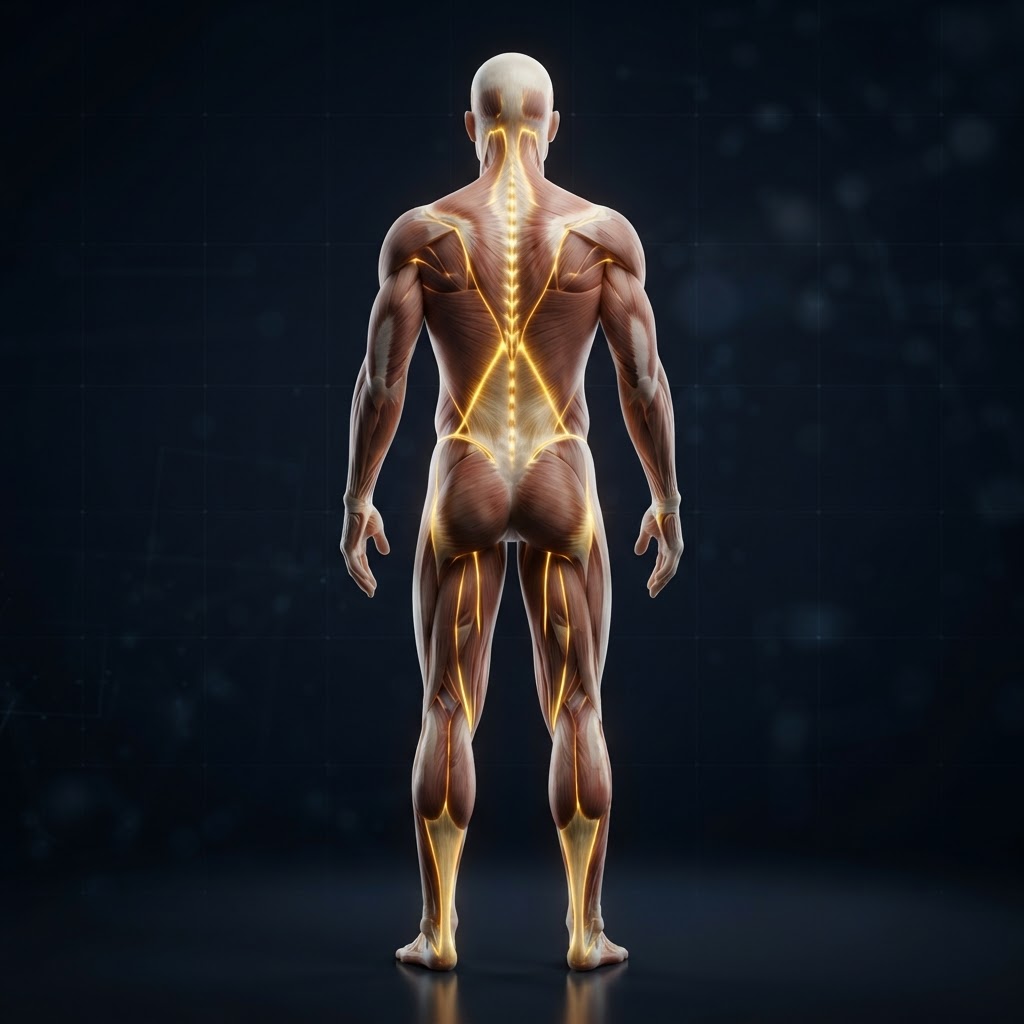
MEMORY TELLS US WHAT YOU REMEMBER. MEASUREMENT SHOWS US WHAT YOUR BODY IS DOING NOW.
Both matter. Neither does the other's job. The retest exists because of the difference between them — and this article explains why re-testing, not the first reading and not the recollection, is where the process earns its value.
Subjective experience remains important throughout. It is often the reason a person arrives at all, it is treated with respect at every stage, and nothing in this system asks anyone to distrust their own memory. Memory and measurement are simply two different kinds of information, used for two different purposes.
Why baseline comes first
A baseline is the relevant measurement recorded before anything changes — pressure, distribution, angle, timing, sequence, repeatability — through the Sensor Sling and pressure mat.
It comes first because every meaningful claim about change is a comparison between two measurements. Without the recorded starting point, the later measurement is a number floating in space. With it, "what changed?" becomes answerable.
Your recollection of how you usually move is valuable context, and it is always welcome. The baseline is something different: a saved, physical reference that does not depend on recollection at all.
Why we change one meaningful input
After the baseline, the practitioner applies the directed calibration — one meaningful input, chosen deliberately.
Changing one meaningful input at a time keeps the comparison interpretable. If several things change at once and the measurement moves, the comparison cannot say much about which change mattered. One input, applied deliberately, gives the retest something honest to compare against.
Why comparable retesting matters
The retest repeats the comparable measurement — same instrument configuration, same measurement conditions, comparable movement.
Comparability is the whole point. If the retest conditions differ from baseline conditions, the comparison says nothing. This is also why the retest happens when it happens rather than immediately: the comparable conditions have to genuinely exist.
Baseline vs current
The first comparison is against the baseline: what does the current measurement show, compared with the recorded starting point?
It can show a measurable change, or no measurable change, or a change that is not consistent under repetition. All three are legitimate, useful outcomes — and the honest one is reported rather than the flattering one.
Previous vs current
Where more than one retest exists, a second comparison becomes available: this session against previous comparable sessions.
This is often the more informative of the two. A single baseline-to-retest comparison shows whether the input changed the response. A series of comparisons shows whether the response is moving consistently in one direction — or holding steady, which is also a finding.
What changed?
Everything in the process converges on that one question. It is asked of the measurement, not of the memory — and it can be answered precisely because the baseline, the input and the retest were each recorded.
COMPARE WHAT CHANGED.
That is the end of the loop, and the beginning of the practitioner's next decision: continue, progress, modify, regress, or retest again. Start at the Trauma Pathway, or read why the starting point matters so much in Why We Establish a Baseline Before Asking What Needs to Change.