MCL and LCL in Lateral Movement: Measuring the Athlete's Response
Lateral movement — shuffles, sidesteps, side-to-side cuts, stops that start from a slide — is the plane where the collateral ligaments do their structural work. The MCL and LCL: Lateral Knee Stability for Cutting and Turning in Sport article covers that anatomy. This article covers the measurement layer: what can be recorded while an athlete actually performs a lateral task, and what that record can — and cannot — tell us.
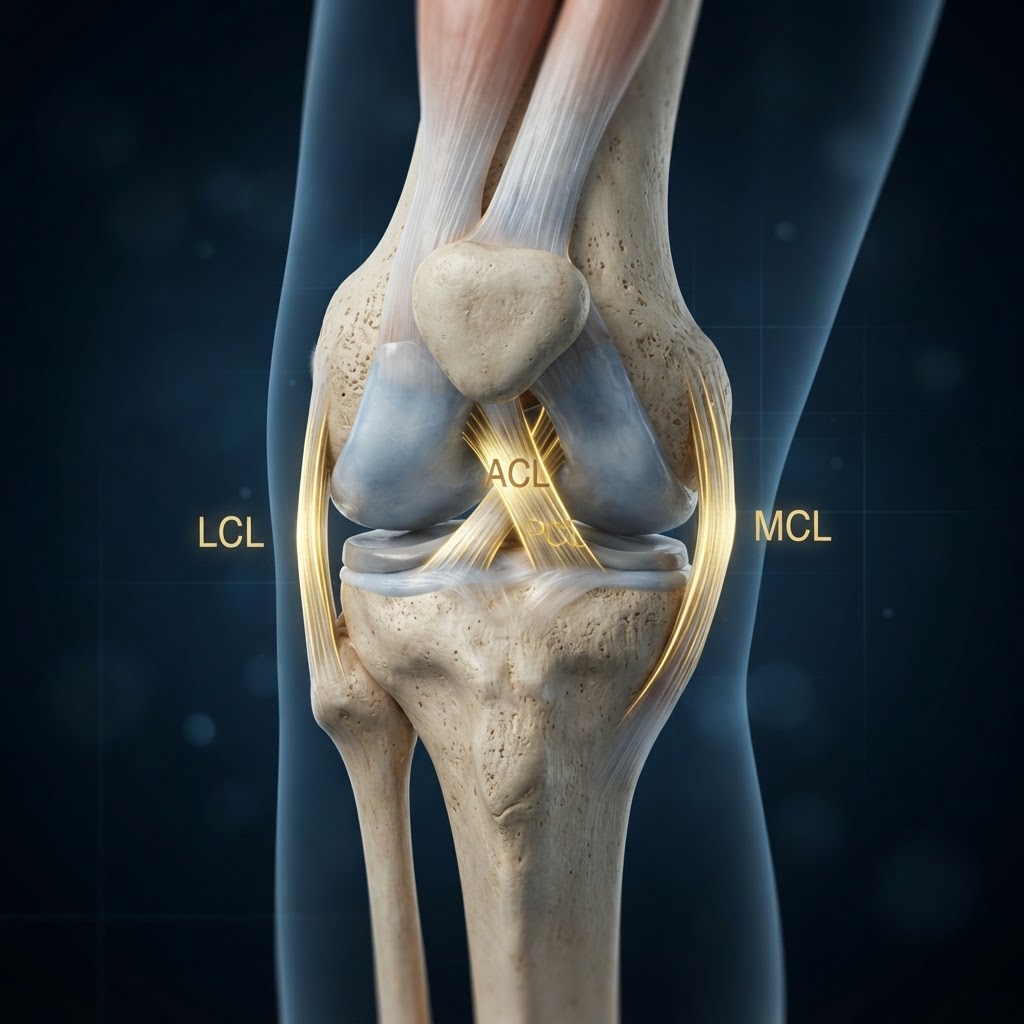
The Collateral Ligaments in Lateral Movement
The collateral ligaments resist forces that push the knee sideways. In sport, those forces arrive constantly: a defender forces a re-plant, a handball player slides before a shot, a rugby player takes contact while turning. The ligament context explains why the lateral plane is worth measuring. It does not tell us what any individual athlete's lateral response looks like — only measurement does that.
Start With a Lateral Baseline
The baseline is a defined lateral task, performed the same way each time: a sidestep, a defensive shuffle, a set cut sequence. The athlete's current response is recorded — movement, the measurements described below, and what they report. This becomes the reference every later comparison is made against.
If a baseline has not been established yet, start with why an athlete baseline matters.
What Can the Sensor Sling Measure During a Lateral Task?
The I AM 900 Sensor Sling records supported physical measurements at Sling measurement locations. Where the instrument configuration supports it, the lateral-task measurement set includes:
- Sling pressure — distributed pressure recorded at relevant Sling measurement locations.
- Pressure distribution — how that recorded pressure is distributed across the relevant sensor locations through the lateral phases of the task.
- Sensor-zone response — differences and changes recorded by the relevant sensor zones as the athlete moves side to side.
- Angle / orientation — orientation information supported by the sensor configuration.
- Timing — when measurable events occur within the task.
- Sequence — the order in which those events occur.
- Repeatability — how consistently the measured response appears across comparable trials.
Ground Loading Where Relevant
Where the pressure mat is used for the same defined task, it records ground/contact pressure and loading information — how the athlete loads the ground during the shuffle or cut. The Sensor Sling itself measures pressure at its own locations; the mat measures at the ground interface. Where both are used, they provide different measurements relating to the same task — complementary records, not a combined score. The distinction is set out in Sensor Sling vs Pressure Mat.
Pressure Is Not the Same as Collateral-Ligament Loading
Recorded Sling pressure during lateral movement describes the physical response measured at the Sling locations. It does not equal the load inside the MCL or LCL, and it is not presented as such. No claim is made that the measurement identifies which ligament is involved, predicts injury or explains a previous injury. The measurements record the response — the anatomical and clinical context is a separate question.
Change the Input, Retest the Lateral Task
Calibration in a lateral task is a defined change to the input or conditions — practitioner-directed, based on what the baseline showed. After the change, the same lateral task is repeated under the same conditions with the same instrument configuration. That is what makes the retest comparable: what calibration means, and the broader sport pathway at /sport.
Compare What Changed
The measured difference between baseline and retest is information about the response — timing shifted, distribution changed, repeatability improved or did not. What the difference means for the athlete's sport is a decision for the practitioner, made with the athlete, with context. The measurement does not by itself establish causation, and it is not a guarantee of any performance outcome. The framework — measure → calibrate → retest — is described on the method page, and retest logic in sport is covered in Retest in Sports Performance.