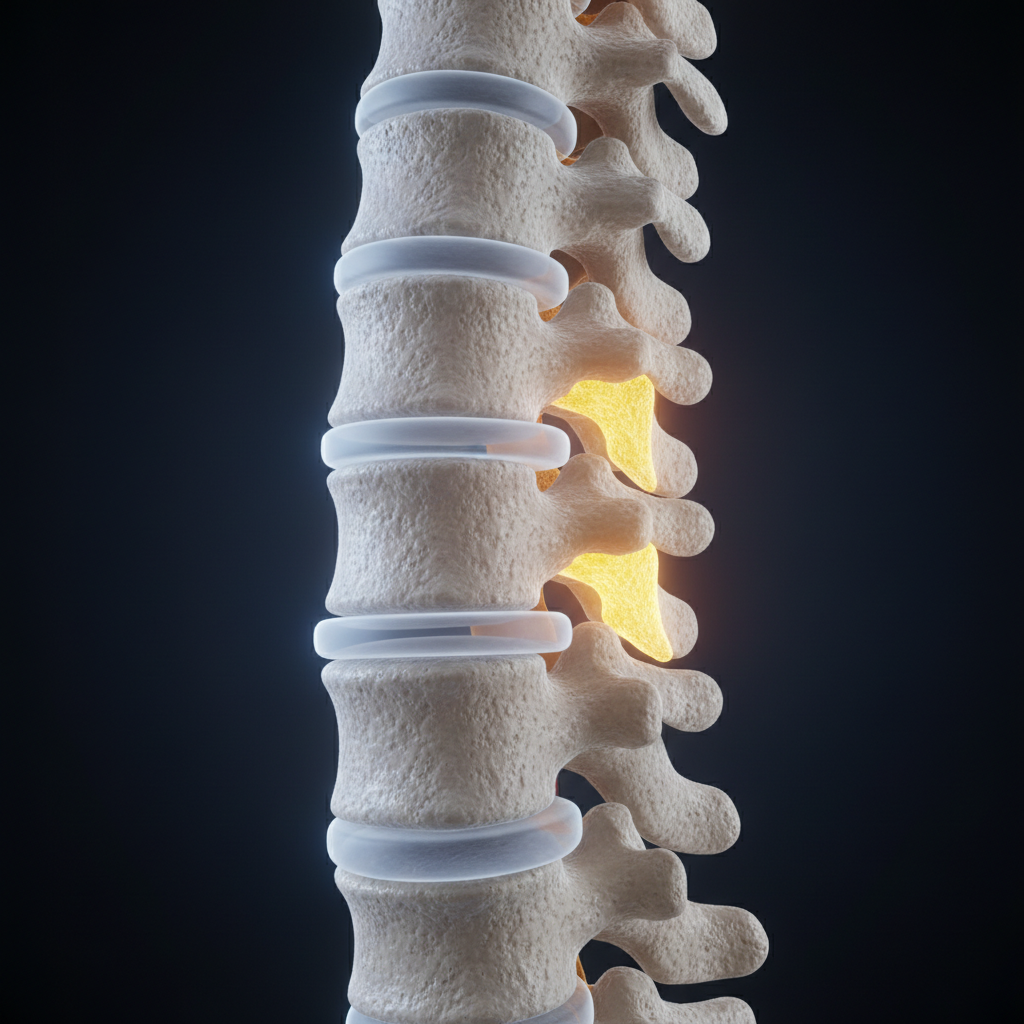
The Truth About Asymmetry: Unlocking Hidden Kinetic Energy
In high-performance athletics, no body is perfectly symmetrical. Many of the world's most dominant athletes — elite sprinters, heavy-hitting forwards, and rotational skill players — possess mild spinal curves or functional scoliosis. Your body is incredibly adaptive, often developing unique structural variations to generate massive rotational force.
When structural asymmetry begins to cause chronic tightness, uneven muscle fatigue, or a sudden drop in explosive power, it isn't a sign that your career is limited. It is a sign that your body is working overtime to stabilise its baseline.
Understanding Functional vs. Structural Scoliosis
How Your 900 Ligaments Maintain Equilibrium
True structural balance relies on a concept called tensegrity — where the bones of your spine float within a perfectly tensioned web of connective tissue. We look at two categories:
- Functional Asymmetry: Repetitive athletic movements place uneven stress on your joints. Over time, the ligaments on one side of the spine tighten to protect the column, creating a temporary, functional curve.
- Structural Scoliosis: A natural, long-term alignment variation in the vertebrae themselves.
The positive takeaway? Both respond beautifully to targeted ligamentous optimisation. We don't need to completely change your natural anatomy to make you pain-free. By balancing the tension of the soft-tissue anchors supporting your spine, we ensure every impact is distributed evenly across your entire frame.
How Balancing Your Spine Releases the Safety Brakes
When your spine operates with an uneven structural load, your brain senses a stability deficit. To keep you safe during high-velocity movements, your central nervous system applies an automatic "neurological safety brake" — dampening the power output of your glutes, hips, or core on one side to prevent over-straining the unevenly loaded joints.
Athletes experience this as a frustrating plateau, a feeling that one leg isn't driving as hard as the other, or chronic tightness in one specific hamstring. The 900 System doesn't fight this protective mechanism — the practitioner targets the underlying tension asymmetry, and the response is examined on retest.
Eliminating Asymmetric Compensations
Once equal tension is restored through precision ligament mapping, your brain instantly releases the safety brake, allowing you to move with smooth, symmetrical velocity and explosive lateral power.
Three Steps to Dynamic Spinal Symmetry
- Tensegrity Mapping: We analyse your positional demands alongside your natural spinal alignment to map where force transfers perfectly — and where it stores unnecessary stress.
- Ligamentous Tension Balancing: Using targeted neuromuscular protocols, we encourage the dense connective tissues to adapt, lengthen, or tighten into an optimal supportive matrix.
- Symmetrical Power Integration: We retrain your nervous system to fire your primary movers evenly — locking in structural balance and translating directly into gains in vertical, broad jump, and change-of-direction metrics.
How We Measure It
The sling's bilateral pressure sensors reveal the left/right tension differential across your spinal chain in real time. You see the asymmetry as a number — and you watch it close as the chain re-tensions into symmetry.
Read Next
- Pressure Distribution and Pain — how force is organised on each side, and what that does and does not tell us
- Pain Location vs Movement Response
- The I AM 900 Pain Pathway