Shoulder Movement in Sport: Measuring Pressure, Angle and Sequence
Overhead sport asks the shoulder to produce force through a chain of linked events — and the biomechanics literature has long treated it that way. Throwing motions have been studied by recording the kinematics and kinetics of the movement itself: how body segments contribute, in what order, at what speeds (Fleisig, Barrentine, Zheng, Escamilla & Andrews. Kinematic and kinetic comparison of baseball pitching among various levels of development. Journal of Biomechanics, 1999). That research context describes what measurement in overhead sport looks like. What follows is how the I AM 900 measurement layer applies it to an individual athlete.
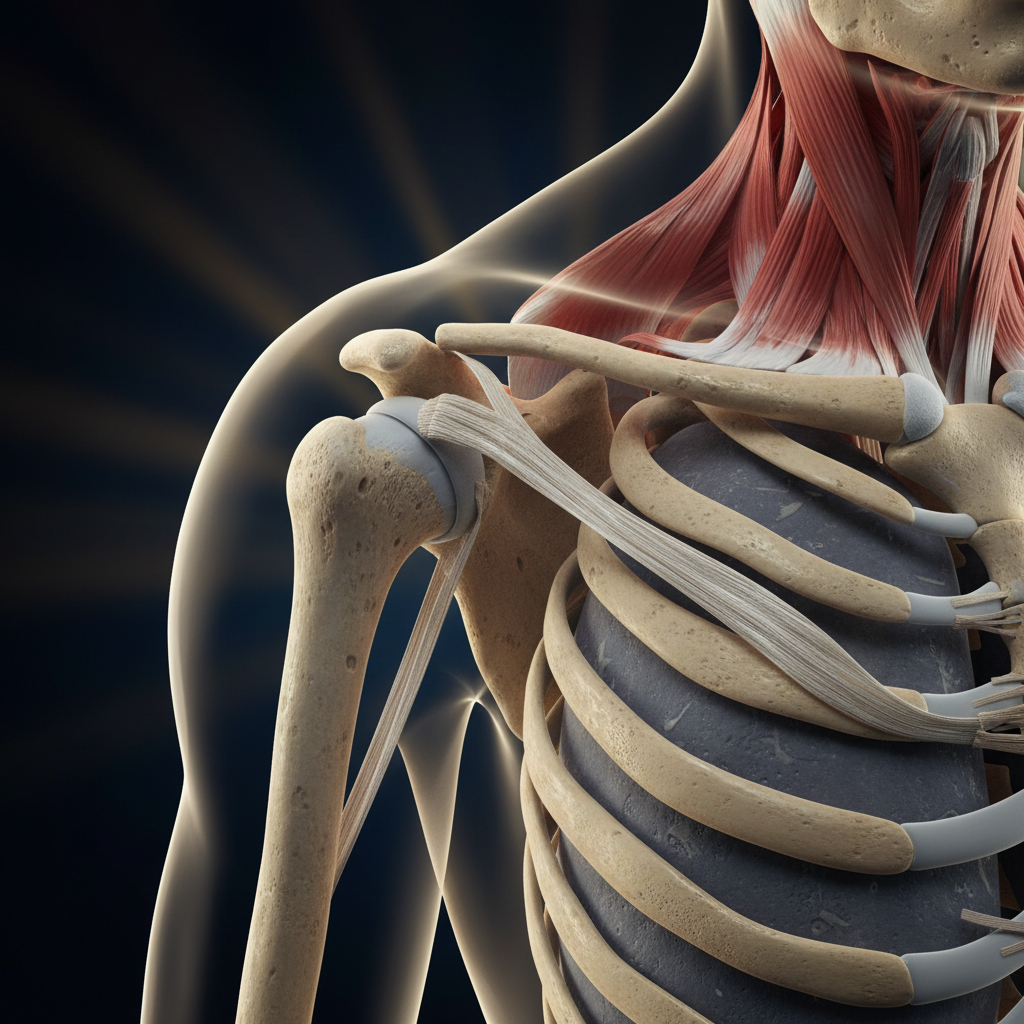
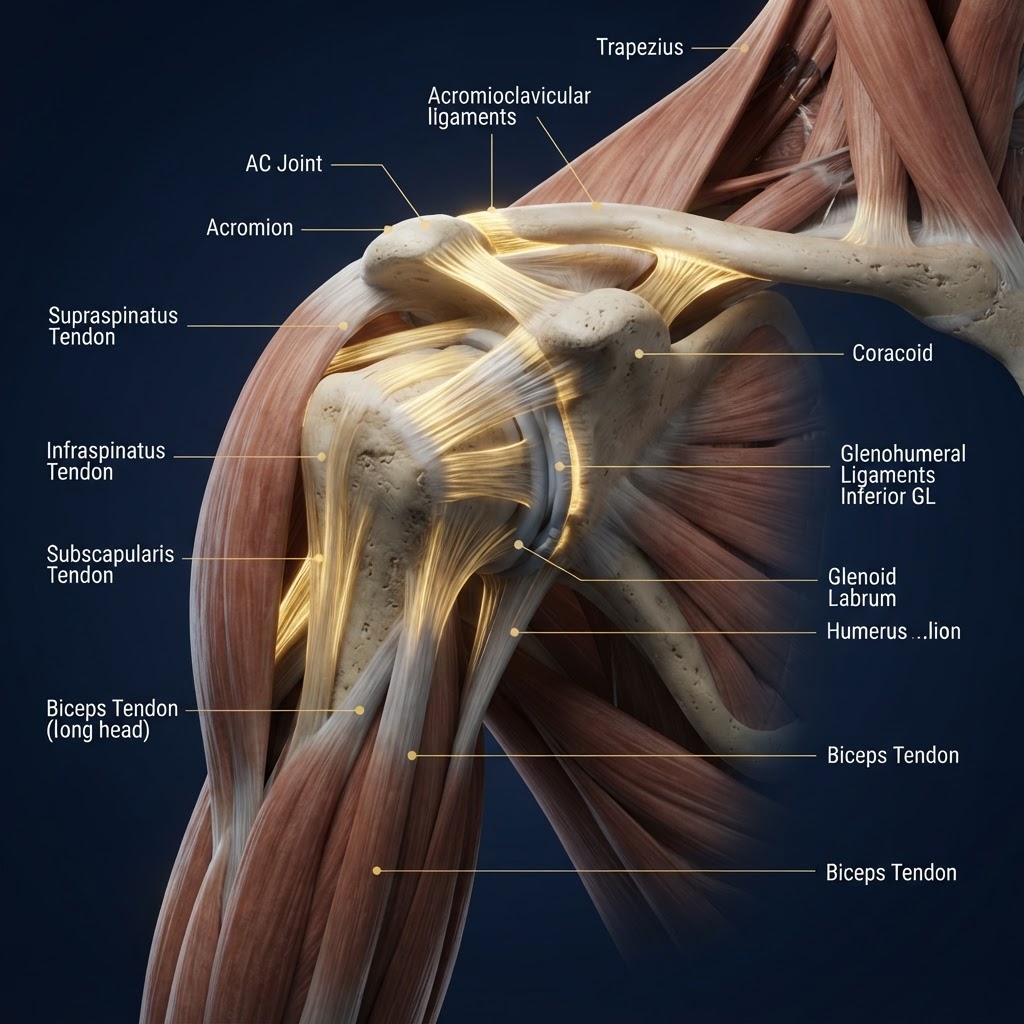
For the anatomy — the rotator cuff and the shoulder ligament complex — see The Rotator Cuff and Shoulder Ligament Complex in Throwing Sports.
The Shoulder Works as a Sequence, Not a Joint
A throw, a serve, a block, a catch above the head: the shoulder is one link in a sequence that starts at the ground and travels upward. Measuring the shoulder in isolation misses the structure of the task — which is why timing and sequence sit at the centre of the shoulder measurement set.
Start With an Overhead or Throwing Baseline
The baseline is a defined task — a set number of throws or serves, a repeated overhead movement — performed under the same conditions each time. The athlete's current response is recorded, alongside what they report. The athlete becomes their own comparison; there is no universal overhead "normal" to hit.
What Can the Sensor Sling Measure?
The I AM 900 Sensor Sling records supported physical measurements at Sling measurement locations. Where the instrument configuration supports it for the task:
Pressure and Pressure Distribution
Distributed pressure recorded at relevant Sling measurement locations, and how it is distributed across those locations through the phases of the overhead movement.
Angle and Orientation
Orientation information supported by the sensor configuration — how the measured orientation at the Sling location changes through wind-up, acceleration and follow-through.
Timing and Sequence
When measurable events occur and the order in which they occur — the structure of the task itself. In overhead movement, sequence is often where the task is most characteristically individual.
Rate of Change
Where supported, the rate at which a recorded variable changes — relevant in a movement whose defining feature is how quickly positions change.
Repeatability Across Attempts
Overhead tasks are highly skilled and highly variable; repeatability — how consistently the measured response appears across comparable trials — is recorded rather than assumed. It is also the recognised measurement concern in this field: reliability limits what any comparison can claim (Atkinson & Nevill. Statistical methods for assessing measurement error in variables relevant to sports medicine. Sports Medicine, 1998).
What This Does Not Claim
The measurement set above records the athlete's physical response. It does not promise throwing velocity, accuracy, durability or injury prevention. It does not diagnose rotator-cuff pathology or any shoulder condition. Measurements record the response; clinical interpretation remains a separate, practitioner-led question.
Calibrate, Retest, Compare
Calibration applies a defined, practitioner-directed change to the input or conditions (what calibration means). The same overhead task is then repeated under the same conditions, and the retest is compared with the baseline: what changed in the recorded pressure, angle, timing and sequence. The difference is information about the response — it does not by itself establish causation, and it is not a guarantee of any performance outcome. The framework is set out on the method page and the calibration process at /calibrate; the sport pathway lives at /sport.