What Is Shoulder Impingement Syndrome?
Shoulder impingement occurs when the tendons or bursa in your shoulder become compressed during movement. It's that sharp pinch when you reach overhead, put on a coat, or throw a ball. In Ireland, it's one of the most common reasons people seek help for shoulder pain.
The Ligament Story
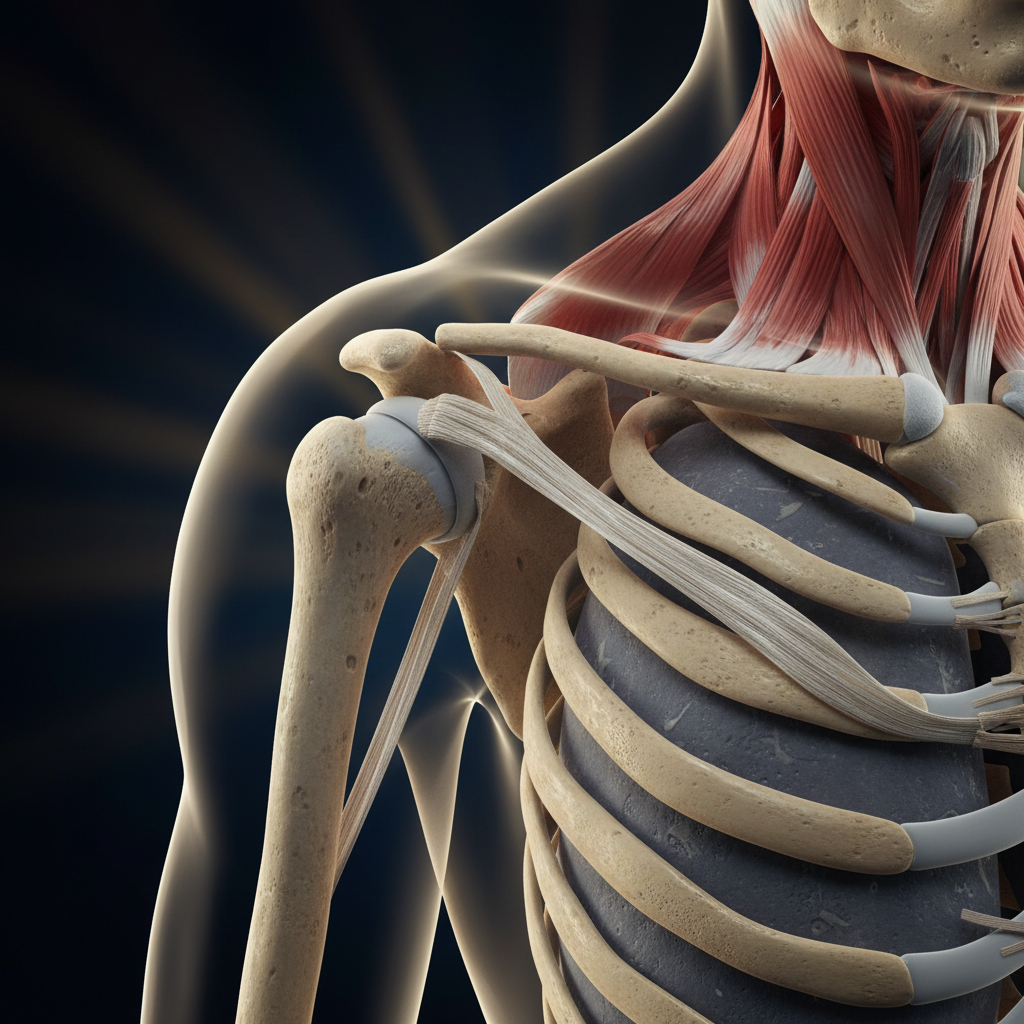
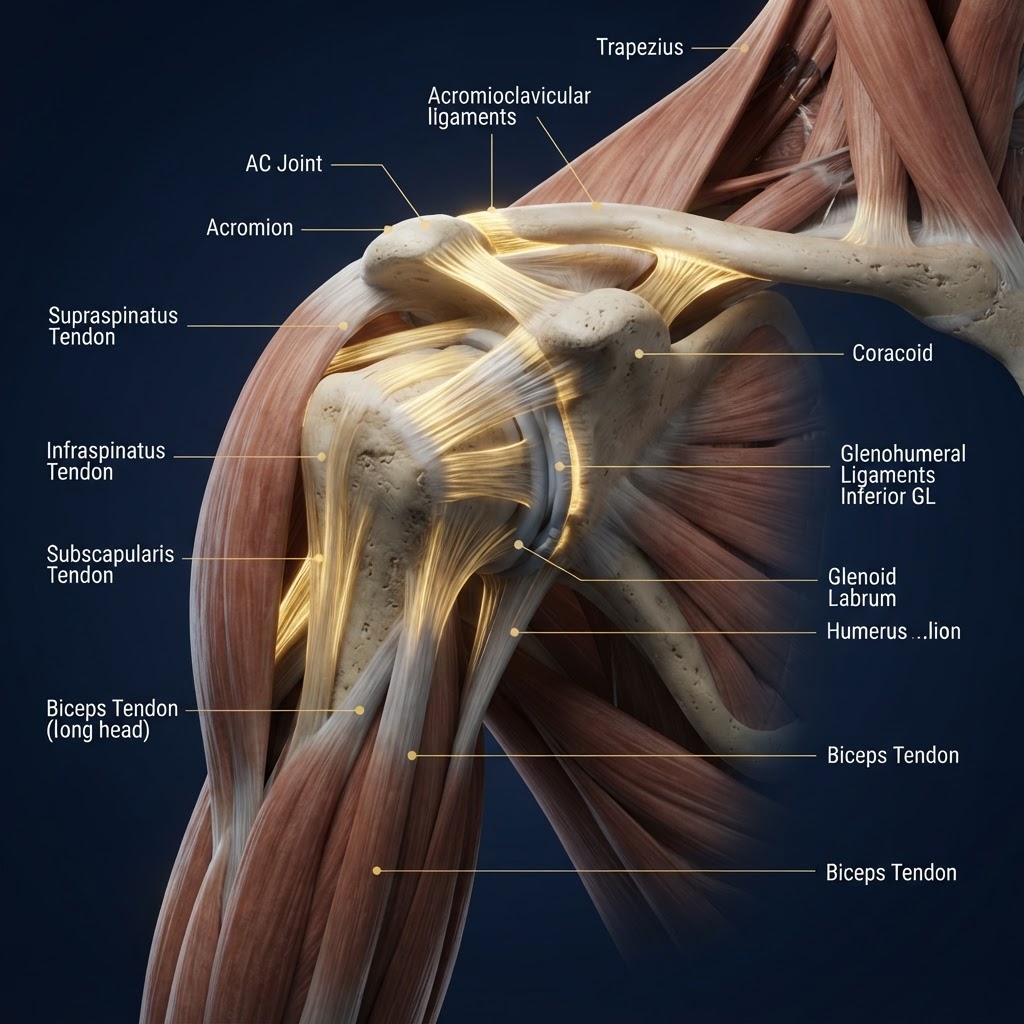
Your shoulder is a marvel of engineering — a ball-and-socket joint held together by a complex web of ligaments and tendons. The coracoacromial ligament, the glenohumeral ligaments, and the rotator cuff tendons all work together to keep the joint stable while allowing incredible range of movement.
When these ligaments become tight, inflamed, or imbalanced, the space inside the shoulder narrows. The tendons get pinched. That pinch is the pain you feel — not damage, but compression.
Why It Happens
Posture
Hours at a desk, driving, or scrolling on a phone round the shoulders forward. This position narrows the subacromial space — the gap where your tendons need to glide. Over time, every overhead movement becomes a pinch.
Sport
GAA, hurling, rugby, and swimming all demand repeated overhead movement. Without adequate recovery and mobility work, the shoulder's ligaments adapt to a tight, compressed state.
The Compensation Chain
When your shoulder hurts, your neck and upper back compensate. This creates a cascade of tension that can turn a simple shoulder pinch into neck pain, headaches, and upper back stiffness.
The Metacognitive Recovery
1. Feel the Space
Close your eyes and slowly raise your arm. Where does the pinch start? Can you feel the moment the space narrows? This awareness is the first step to recovery.
2. Open the Chest First
Before working on the shoulder itself, address the chest. Tight pectoral muscles pull the shoulder forward, narrowing the space. Gentle doorway stretches open the chest and give the shoulder room.
3. Stabilise the Blade
The shoulder blade (scapula) is the foundation of shoulder movement. If it's not moving properly, the shoulder joint takes all the load. Strengthening the muscles around the scapula restores healthy mechanics.
4. Move Within the Pain-Free Range
Find the range where there's no pinch, and work there. Gradually expand it. Your nervous system needs to learn that movement is safe before it stops sending pain signals.
The Irish Context
Cold Irish mornings stiffen the shoulder's ligaments, making the first movements of the day the most painful. Warm up before reaching overhead. GAA and hurling players should prioritise shoulder mobility between training sessions, not just before matches.
Action Steps
- Doorway stretch: 30 seconds, twice daily, to open the chest.
- Scapular setting: Practice drawing your shoulder blades down and back — 10 reps, 3 times daily.
- Pain-free range movement: Raise your arm only to the point before the pinch, 10 reps, twice daily.
- Track your triggers: Note which daily activities cause the most pinching.
The Mindset
Shoulder impingement isn't a permanent condition. It's a mechanical problem with a mechanical solution. By understanding the space inside your shoulder and learning to keep it open, you can reclaim pain-free movement — one aware repetition at a time.
Keep Exploring
For the measurement layer around shoulder pain — pressure, angle and sequence measured at baseline and retest — see Shoulder Pain and Movement: Pressure, Angle and Sequence.