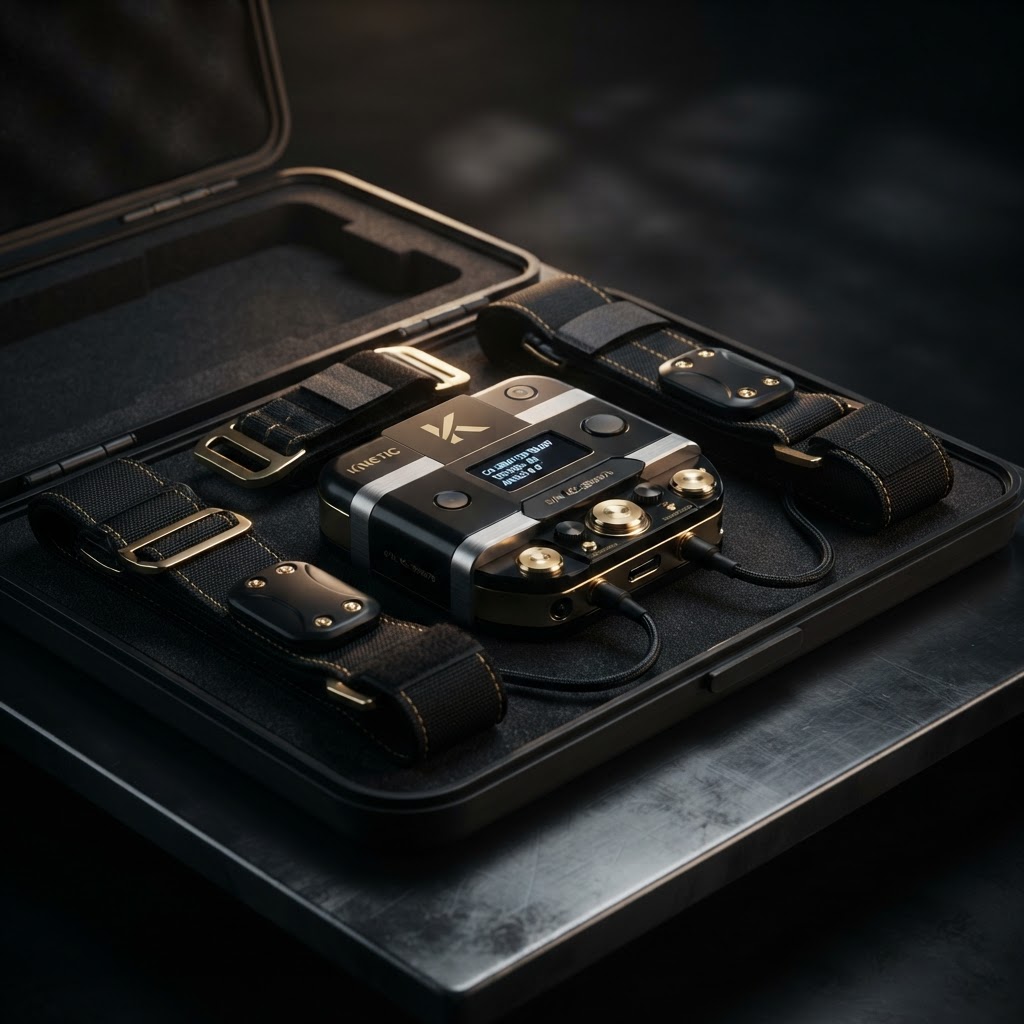
A striking first reading is tempting to act on. It is also the most likely reading to be wrong — not because the instrument failed, but because a single repetition of anything carries more than the thing being measured.
Why a single repetition can mislead
A single attempt may be influenced by many factors: unfamiliar surroundings, a first-attempt hesitation, fatigue, recent activity, attention, or simple day-to-day variation. None of these are the response of interest — all of them can appear inside a single reading.
One repetition is one observation.
This is not unique to any instrument. Movement and performance measurements vary naturally between attempts, and external research on movement variability and repeatability treats that variation as an expected property of repeated measurement (e.g. Stergiou & Decker, 2011, Human Movement Science). That research supports the general concept of variability in repeated movement; it does not validate any specific system, including this one.
What repeated comparable measurement adds
Repetition under comparable conditions does one specific thing: it helps establish whether an observed physical response is consistent.
If the same pattern — the same pressure shift, the same timing slip, the same distribution bias — appears across comparable repetitions, the observation becomes characteristic. If it does not repeat, the honest conclusion is that the first reading was not dependable, and the process says so rather than building on it.
The three levels of comparison
Repeatability is tested at three levels, each answering a different question:
-
Rep-to-rep comparison — within a session: does the same pattern appear across attempts under the same conditions? This filters out first-attempt effects and momentary outliers.
-
Session-to-session comparison — between sessions: does the pattern still appear on a different day, in the same comparable configuration? This filters out the effect of any single session's conditions.
-
Baseline-to-retest comparison — across the process: does the pattern change after the input changes? This is the comparison the whole calibration process is built around.
Worked with Sensor Sling and pressure-mat examples
The Sensor Sling records the raw material for all three levels: Sling pressure and pressure distribution, Sling angle, timing and movement sequence. The pressure mat adds ground and contact loading — a loading bias that appears on attempt one, attempt two and session two is a different kind of fact from one that appeared once, and only the repetition tells you which kind you are looking at.
Movement context matters too: repeatability is judged inside the comparable movement, not on numbers abstracted away from it.
An honest boundary
Repeatability, treated carefully, is a strong form of evidence within this system — but it is not a statistical guarantee, and this article does not overstate it. Without supporting data from controlled studies, the claim stays where the evidence supports it: repeated comparable measurement is the available way to establish whether an observed physical response is consistent, and consistency is what makes later comparison meaningful.
One response starts the process. Repeatable response earns the conclusion.
A single reading begins the conversation. Repetition decides whether the conversation continues on solid ground — and the Trauma Pathway is structured so that nothing important is concluded on one response.