Timing and Sequence After Injury: Measuring the Order of the Response
A single pressure or loading value is a snapshot. Timing and sequence add structure: when a measurable event occurs, and the order in which measurable events occur. Two people can record the same peak pressure while loading very differently — one reaching it early in the task, one late; one distributing it in a stable order, one in an order that changes trial to trial. That difference is invisible in a single value and visible in the measured sequence. Movement variability and the structure of variability have been studied as meaningful signals in movement science (Stergiou & Decker. Human movement variability, nonlinear dynamics, and pathology: is there a connection? Human Movement Science, 2011) — the same general idea, applied here to the individual's recorded response.
Start With the Baseline
The baseline records the timing and sequence of the current physical response during a defined task — same task, same conditions each time (see Why We Establish a Baseline Before Asking What Needs to Change).
What Can the Sensor Sling Measure?
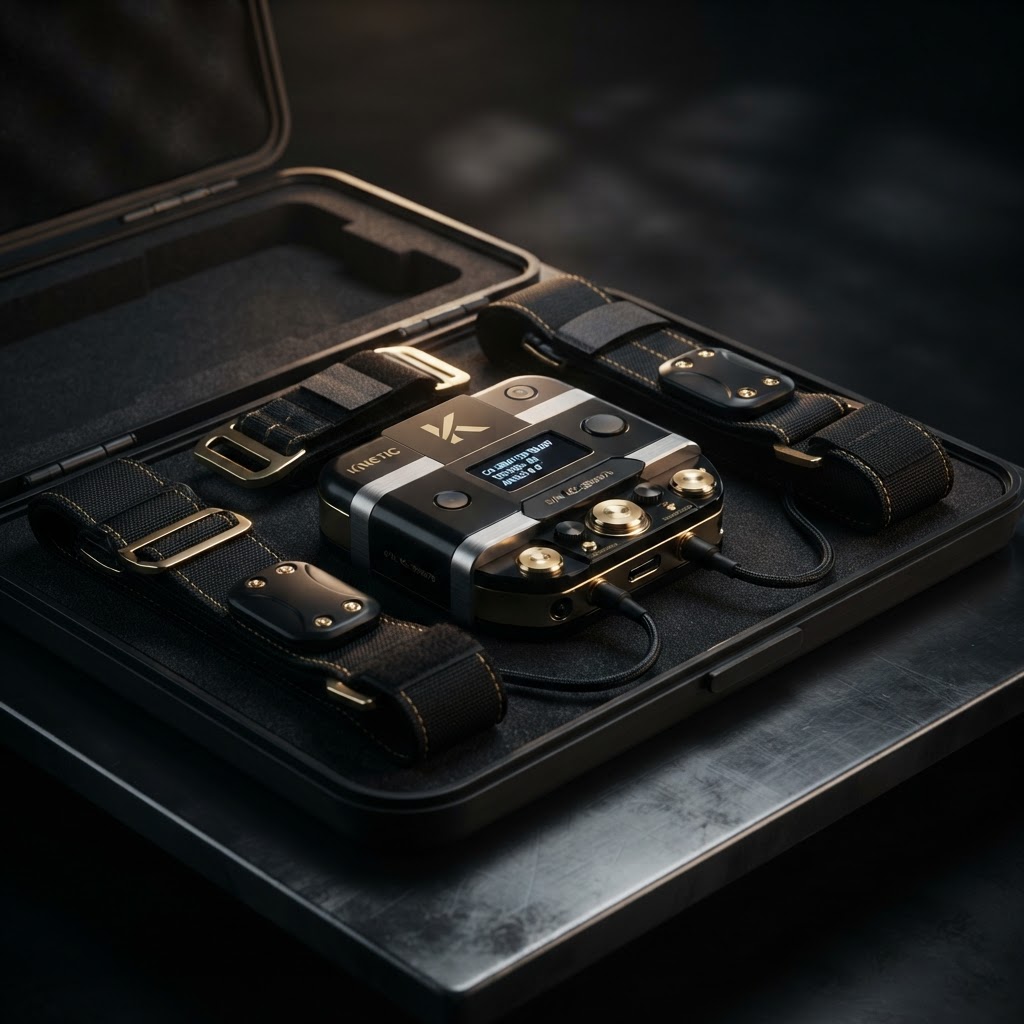
Where the instrument configuration supports it for the task, the I AM 900 Sensor Sling records supported physical measurements: sling pressure and pressure distribution at relevant Sling measurement locations; angle / orientation where supported; timing — when measurable events occur within the task; sequence — the order in which they occur; speed / rate of change where supported — how quickly a recorded variable changes; multi-Sling measurement where genuinely used — where more than one Sling location is configured for the task, relationships between the recorded measurements at different locations are observations about the recorded data, not anatomical or neurological claims.
Repeatability
A timing or sequence pattern is only a record if it appears consistently. Repeatability — how consistently the recorded response appears across comparable trials — is itself part of the measurement (see Why One Response Isn't Enough: The Importance of Repeatability).
What Timing Is Not Taken to Mean
A timing or sequence difference is an observation about the current physical response. It does not diagnose a neurological cause, does not diagnose a psychological cause, does not identify the cause of the original event, and does not explain reported pain. The measurement records the order of the response. What it means belongs to the practitioner's review of the comparison — not to the number alone.
Change the Input, Retest, Compare
Calibration applies a defined, practitioner-directed change to the input or conditions (what calibration means). The same task is then repeated under the same conditions, and the retest is compared with the baseline: when the measurable events occurred, and in what order. The comparison is information about the response — it does not by itself establish why anything changed, and it is not a guarantee of recovery.
Where This Fits
The trauma pathway is at /trauma; the method at /method; the calibration process at /calibrate; the instrument at I AM 900 Sensor Sling. Related reading: Pressure, Timing and Protective Movement: What Are We Actually Measuring? and Why Re-testing Matters: Measurement Gives Us a Comparison.