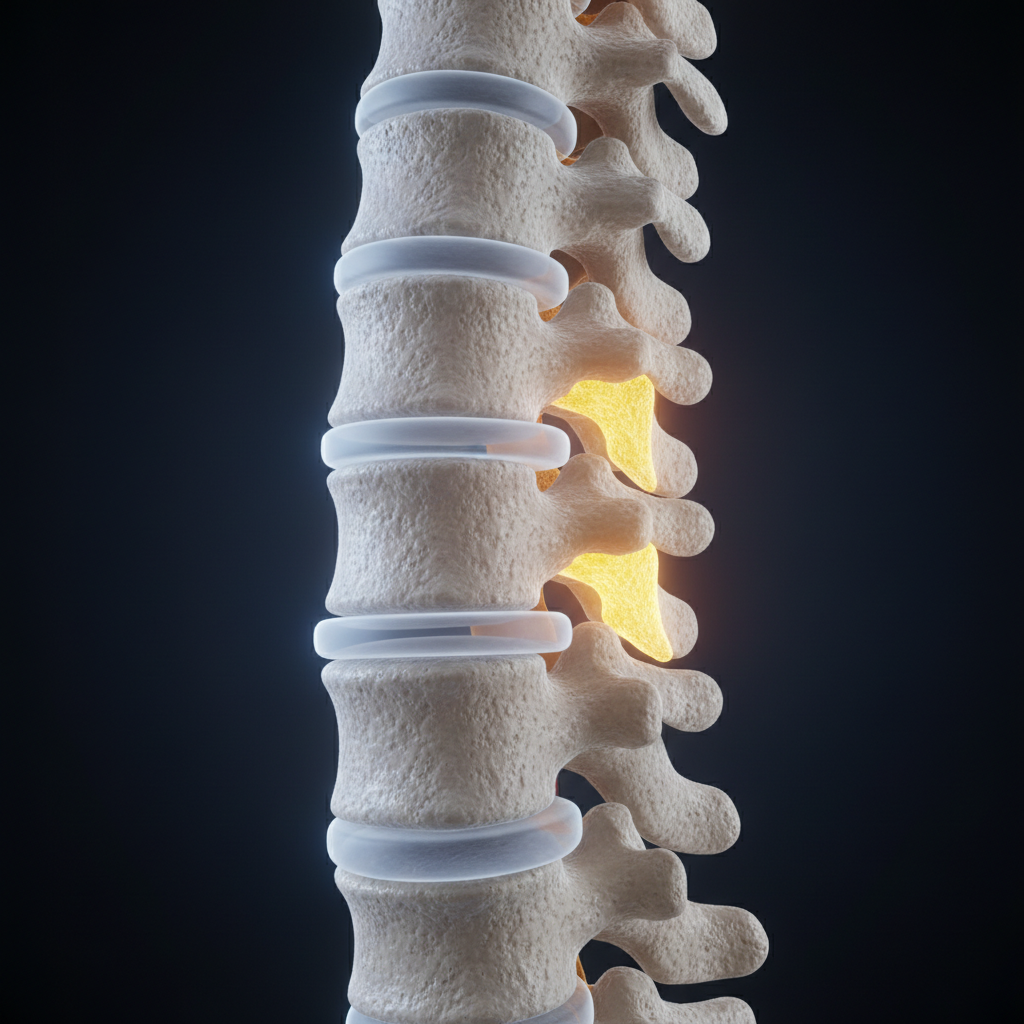
What Disc Degeneration Really Means
When a doctor says "disc degeneration," it sounds like your spine is falling apart. But here's the reality: disc degeneration is as normal as grey hair. By age 40, most people in Ireland have some degree of disc degeneration, and many of them feel absolutely nothing.
The word "degeneration" implies deterioration, but what's actually happening is change. Your discs lose water content over time, becoming less plump and more fibrous. This isn't inherently painful — it's your body adapting to a different stage of life.
Why Some People Feel Pain and Others Don't
This is the question that changes everything. If disc degeneration is universal, why does it cause debilitating pain in some people and nothing in others?
The answer lies in the ligament system and how your body has adapted to the changes:
- Asymmetric compensation: When a disc thins, the vertebrae above and below shift slightly. Your ligaments must hold a new, less ideal position. Over years, this creates tension patterns that generate pain.
- Nerve sensitivity: Chronic tension in spinal ligaments can sensitise nearby nerves, making normal signals feel painful. This is why the pain often feels worse than the imaging suggests.
- Movement avoidance: When movement hurts, you move less. Less movement means stiffer ligaments. Stiffer ligaments mean more pain. The cycle feeds itself.
Breaking the Cycle with Awareness
The most powerful thing you can do for disc degeneration is rebuild your movement vocabulary. Your spine was designed to move in every direction — flexion, extension, rotation, lateral flexion. Pain makes us freeze, but freezing accelerates degeneration.
Here's the metacognitive approach:
1. Map Your Safe Movements
Not all movements hurt. Some feel fine, even good. Find them. Lie on the floor and slowly explore which spinal movements are pain-free. That's your starting point — not the movements that hurt.
2. Expand the Safe Zone Gradually
Once you know your pain-free range, gently push its edges. Not into pain — to the edge of discomfort and back. This teaches your nervous system that movement is safe, which reduces the protective pain response.
3. Feel the Ligament Chain
Disc degeneration shifts tension to the posterior chain — the ligaments running along the back of your spine. Can you feel them? When you bend forward, which part of your back grips first? This awareness helps you redistribute load more evenly.
The Irish Context
Ireland has specific factors that affect disc degeneration:
- Cold, damp climate: Stiffens ligaments and reduces circulation to spinal tissues. Warm-up becomes essential, not optional.
- Sedentary winters: Irish winters keep people indoors. The spine needs variety — sitting, standing, walking, lying down. Too much of any one position accelerates degeneration.
- Sporting culture: GAA, rugby, and hurling create impact loads that can accelerate disc wear. Understanding how to offload the spine between matches is crucial.
Action Steps
- Daily spinal movement: 5 minutes of gentle, pain-free spinal movement every morning. Cat-cow, gentle rotations, pelvic tilts.
- Hydration: Discs rehydrate overnight. Drinking enough water gives them the raw material they need.
- Position variety: Never stay in one position for more than 30 minutes. Stand, sit, walk, lie down — rotate through positions.
- Strengthen the posterior chain: The muscles and ligaments along the back of your body support the spine. Strengthen them and the discs have less work to do.
Reframing the Diagnosis
Disc degeneration isn't a downward spiral. It's a signal to understand your body more deeply. The people who thrive despite degeneration are those who use the diagnosis as a catalyst for awareness, not a reason to give up.
Your spine has served you for decades. It will serve you for decades more — if you learn to listen to it. The pain you feel is your body asking for attention, not announcing defeat. Give it the attention it deserves, and it will respond.