The Structures You Don't Hear About
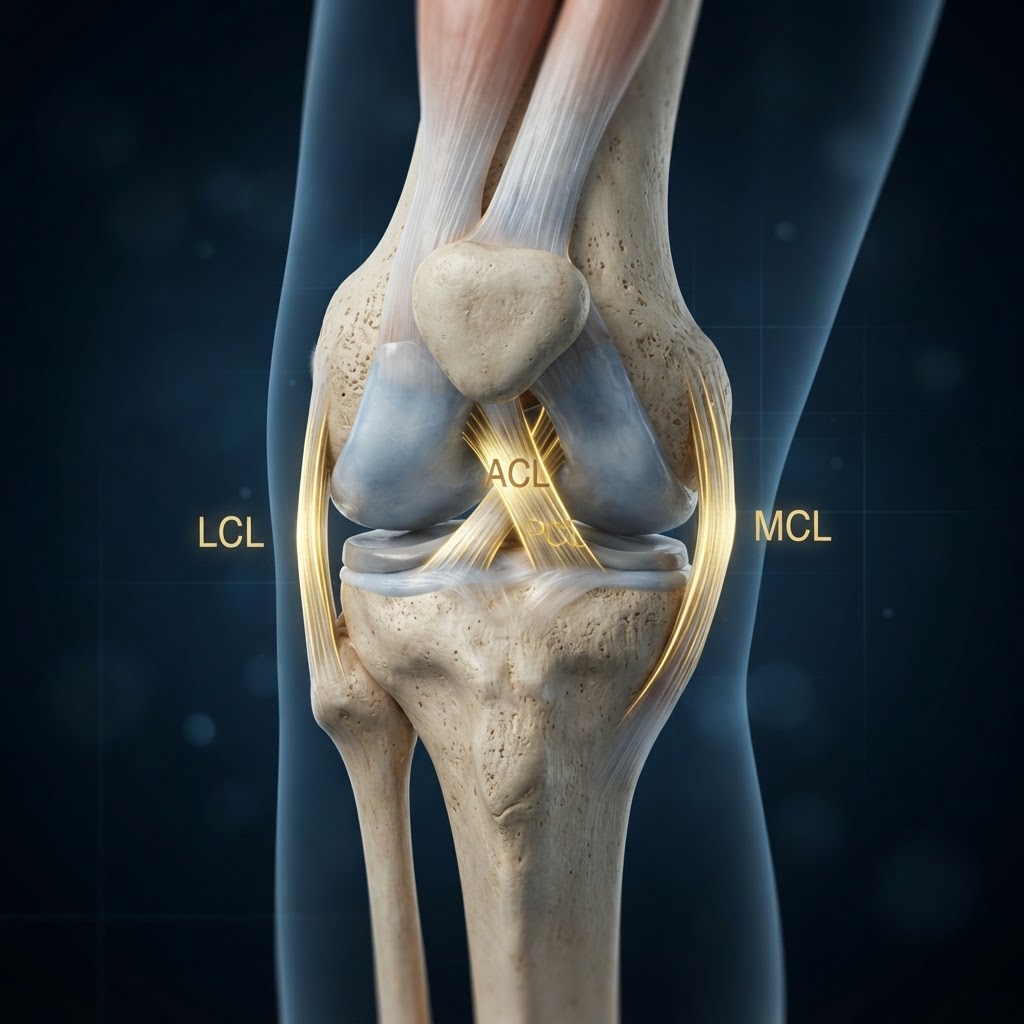
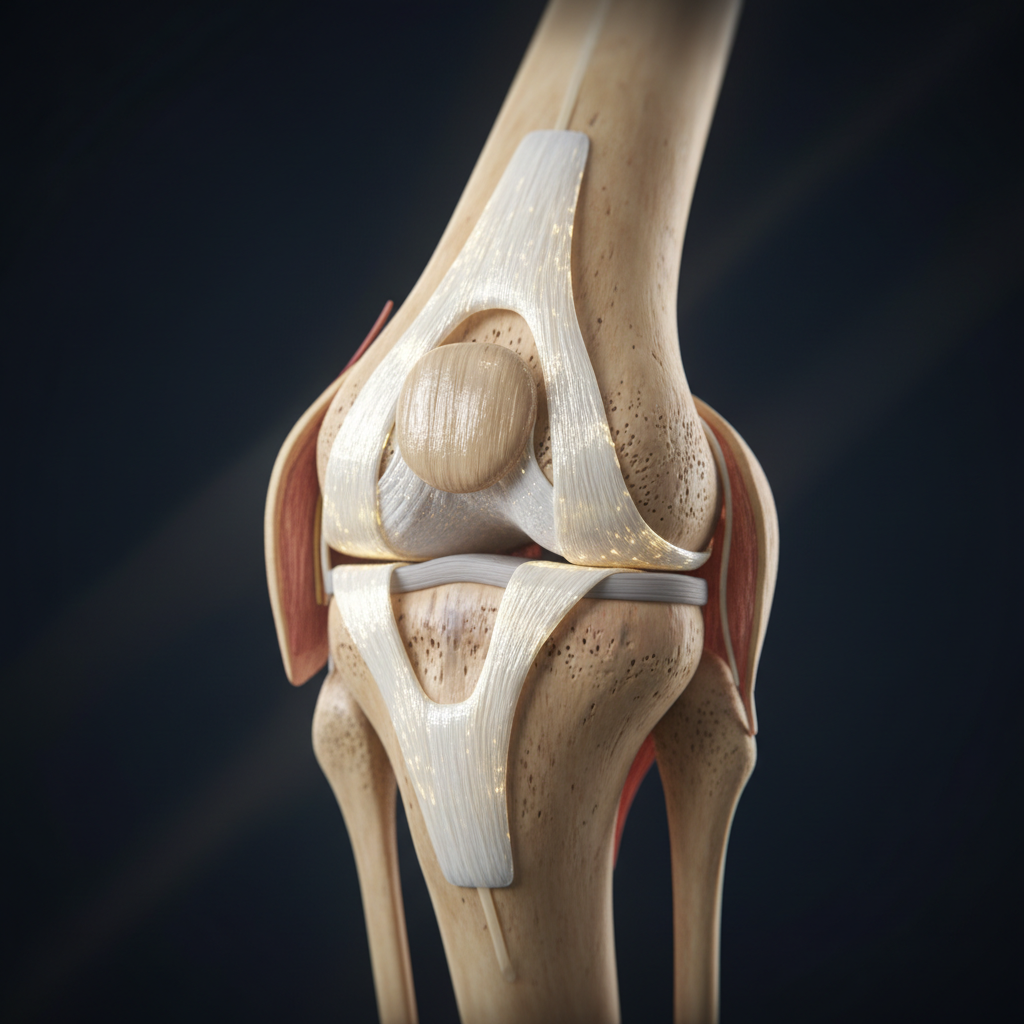
While the ACL dominates sports medicine headlines, a group of posterior knee structures does equally critical work — especially in the contact, scrummaging, and load-bearing demands of rugby. These are the posterior cruciate ligament (PCL), the meniscofemoral ligaments, and the posterolateral corner.
The Posterior Cruciate Ligament (PCL)
The PCL is the strongest ligament in the knee and the primary restraint against posterior tibial translation — the shin bone sliding backward relative to the thigh. It has two bundles:
- Anterolateral bundle — tight in flexion, the larger and stronger bundle
- Posteromedial bundle — tight in extension
In rugby, the PCL is stressed during:
- Scrummaging — the driving force pushes the tibia posteriorly
- Falling on a bent knee — a direct posterior blow to the tibia
- Rucking and mauling — the knee is loaded in deep flexion under contact
PCL injuries are often less dramatic than ACL tears — they can go initially undiagnosed — but they profoundly affect performance, causing a sense of instability and posterior knee pain.
The Meniscofemoral Ligaments
These are two small but important ligaments that connect the posterior horn of the lateral meniscus to the femur:
- Ligament of Humphry — passes anterior to the PCL
- Ligament of Wrisberg — passes posterior to the PCL
These ligaments help control the lateral meniscus during knee motion and work alongside the PCL to resist posterior tibial translation. When the PCL is injured, these ligaments become secondary stabilisers — their condition often determines whether a PCL injury leads to ongoing instability.
The Posterolateral Corner (PLC)
The PLC is a complex of structures on the outer back of the knee that resists posterior translation, external rotation, and varus. It includes:
- Lateral collateral ligament (LCL)
- Popliteus tendon and popliteofibular ligament
- Arcuate ligament
- Fabellofibular ligament
PLC injuries are often part of complex knee injuries — a PCL tear combined with PLC injury is a devastating combination that severely compromises knee stability. In rugby, PLC injuries occur from:
- Hyperextension with a twisting component
- Direct blow to the inner knee (driving the knee into varus)
- Combined rotational forces during tackles
Why These Structures Matter for Rugby Performance
Rugby places unique demands on the knee:
- Deep flexion loading — scrums, rucks, mauls
- Posterior force — the driving nature of the scrum
- Rotational stress — cutting and sidestepping
- Contact from all angles — tackles, collapses
The posterior knee structures are the body's primary system for managing these demands. When they are conditioned and functioning well, the rugby player has the stability and power to scrummage, ruck, and run effectively. When they are compromised, every aspect of performance suffers.
Signs of Posterior Knee Ligament Issues
- Pain in the back of the knee, especially with deep bending
- A feeling of the knee shifting or giving way backward
- Difficulty with deep squats or scrummaging
- Pain when decelerating or running downhill
- Recurring swelling after activity
Enhancing the Posterior Knee
The posterior knee structures can be strengthened through:
- Hamstring-focused training — the hamstrings are the PCL's dynamic assistant
- Deep-range knee work — controlled loading in flexion
- Popliteus activation — often neglected, this muscle is key to PLC function
- Posterior chain integration — connecting the calf, hamstring, and glute systems
- Proprioceptive work — the posterior knee is rich in mechanoreceptors
The I Am 900 Approach
Our sling system reads the tension patterns across the entire posterior knee — PCL, meniscofemoral ligaments, and posterolateral corner — during the scrummaging, rucking, and running movements that rugby demands. This reveals the hidden weak points that traditional assessment misses, guiding enhancement that builds a truly stable, powerful rugby knee.
The structures you cannot see are often the ones that limit performance. Our system was built to find them.