What Is the ACL and Why Does It Matter?
The anterior cruciate ligament (ACL) is the most well-known ligament in sports medicine — and for good reason. It is the primary restraint against anterior tibial translation (the shin bone sliding forward relative to the thigh bone) and a critical stabiliser against rotational forces. Every time an athlete cuts, pivots, or lands from a jump, the ACL is working.
Anatomy of the ACL
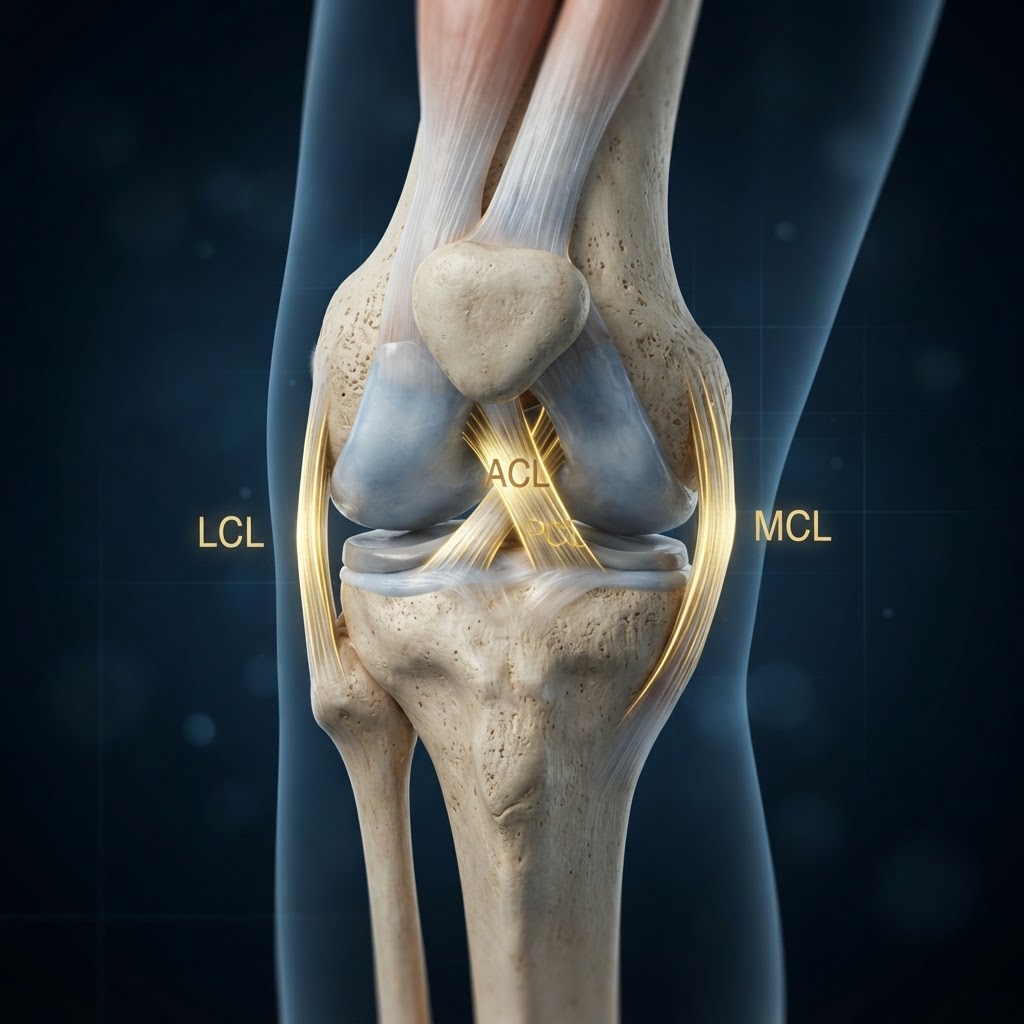
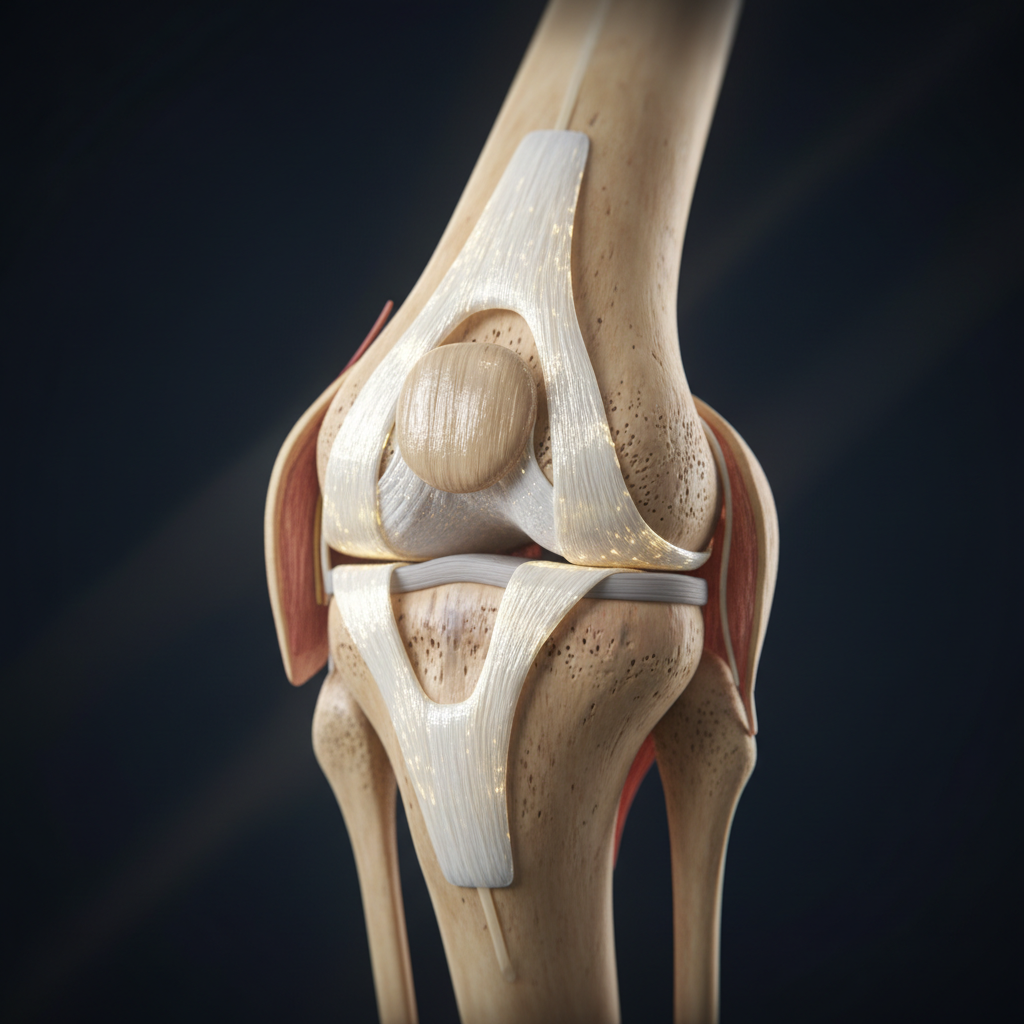
The ACL is one of two cruciate ligaments inside the knee joint (the other being the PCL). It runs from the posterior aspect of the femur's intercondylar notch to the anterior tibia. The ligament has two functional bundles:
- Anteromedial bundle — tight in flexion, resists anterior translation
- Posterolateral bundle — tight in extension, resists rotational forces
This dual-bundle structure gives the ACL its remarkable ability to stabilise the knee across the full range of motion.
Why the ACL Ruptures in Sport
ACL injuries are overwhelmingly non-contact — approximately 70% of tears occur without another player being involved. The mechanism typically involves:
- Sudden deceleration followed by a change of direction
- Landing from a jump with the knee in valgus (inward collapse)
- Pivoting with the foot planted and the body rotating
These movements place enormous rotational stress on the ACL. When the quadriceps fire forcefully with the knee near extension — as happens during cutting — the ACL can be loaded beyond its failure point.
Which Sports Carry the Highest Risk?
- Football (soccer) — cutting, sudden stops, and landing from headers
- GAA and hurling — rapid direction changes on uneven ground
- Rugby — contact and non-contact pivoting under load
- Gymnastics — landings from height with rotational forces
- Basketball and netball — jumping, landing, and cutting
Enhancing ACL Performance
The ACL is not just something that can rupture — it is a performance structure that can be enhanced. Key factors include:
- Hamstring strength — the hamstrings act as an ACL agonist, resisting anterior tibial translation
- Neuromuscular control — training the body to avoid dangerous knee positions
- Proprioception — the knee's awareness of its position in space
- Ligament conditioning — progressive loading that strengthens the collagen matrix
The I Am 900 Approach
Our sling system reads the tension patterns across the knee's full ligament complex — ACL, PCL, MCL, and LCL — during dynamic movement. By identifying asymmetries in how these ligaments work together, we guide targeted work — then retest against the baseline to compare what changed in the knee's rotational control.
Understanding the ACL is the first step toward optimising it. Whether you are returning from injury or seeking to push performance, the ACL's role in cutting, pivoting, and landing makes it one of the most important structures in the athletic body.
Sport Application — What Would We Measure?
This is a measurement example, not a case study. No individual athlete's recorded data appears here.
For a change-of-direction or landing task, an assessment may compare relevant measurable physical responses around the task.
Sensor Sling measurements, where supported by the configuration:
- pressure
- distribution
- angle and orientation
- timing
- sequence
- repeatability
Pressure-mat measurements, where used:
- left/right ground loading
- distribution
- timing
Movement observation adds task execution, initiation, sequence and repeatability.
The process is the same as for any I AM 900 assessment:
ESTABLISH BASELINE → MEASURE → CHANGE INPUT → RETEST THE SAME DEFINED TASK → COMPARE WHAT CHANGED
This describes a comparison process. It does not claim that the Sensor Sling directly measures ACL strain, does not diagnose ACL pathology and does not promise injury prevention.
The measurement vocabulary behind this is set out in What Should You Measure in Sport?.
Keep Exploring
For the measurement layer of this topic — what can be recorded during a change-of-direction task, before and after calibration — see ACL Change of Direction: What Can We Measure Before and After Calibration?.