Movement Asymmetry After an Event: Measurement Before Interpretation
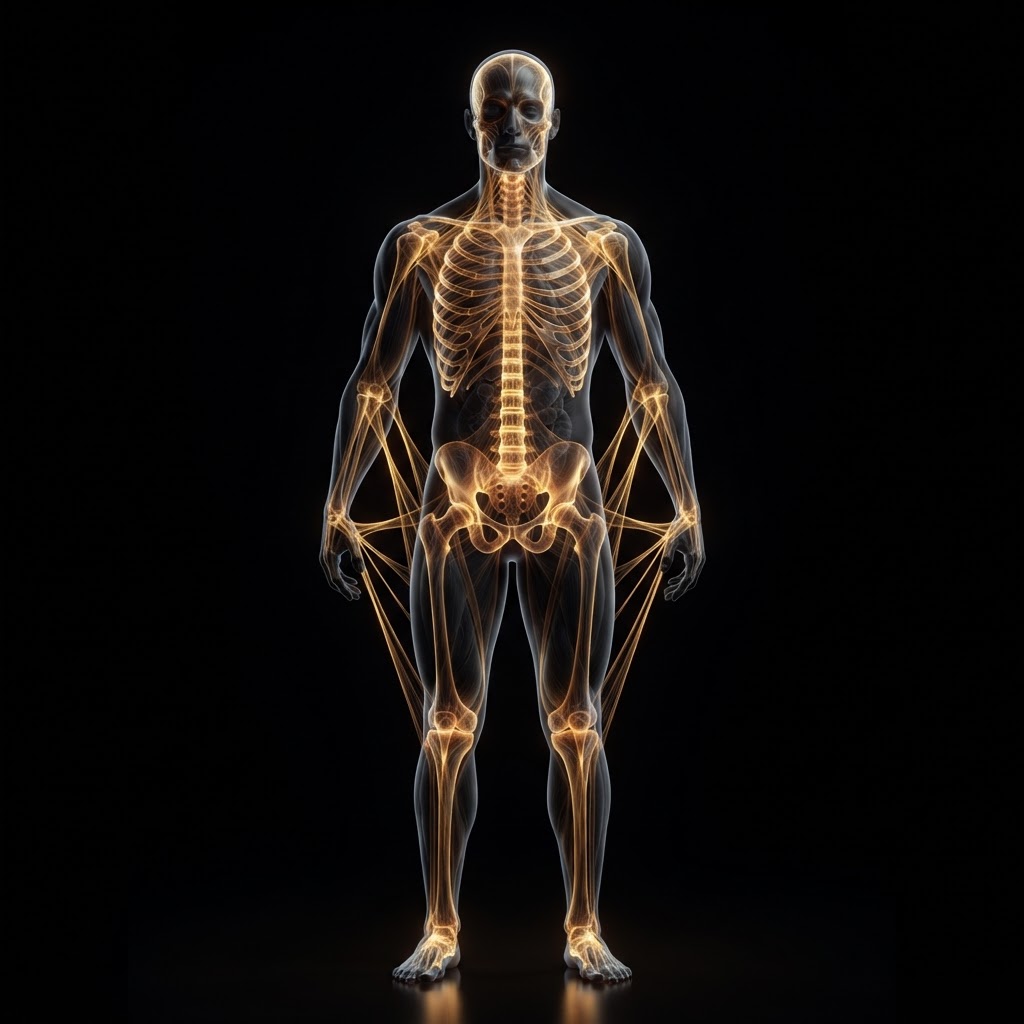
A difference between the left and right sides after an event is one of the most over-interpreted findings in movement. The I AM 900 position is deliberately narrow: asymmetry is an observation. It is not automatically a diagnosis, and it is not automatically a cause. The asymmetry may be a current loading response — or it may be a normal feature of how that person has always moved. Only the comparison tells you what is worth attention.
Start With the Baseline
The baseline records how the person currently moves and loads during a defined task — both sides, same conditions each time (see Why We Establish a Baseline Before Asking What Needs to Change). The baseline is where interpretation starts: not at the number, at the comparison.
What Is Measured?
Where the instrument configuration supports it for the task, the I AM 900 Sensor Sling records supported physical measurements: left/right pressure where measured — distributed pressure at relevant Sling measurement locations on each side; distribution — how the recorded pressure is distributed across the relevant sensor locations; angle / orientation where supported; timing and sequence — when measurable events occur and the order in which they occur; repeatability — how consistently the recorded response appears across comparable trials (reliability is a recognised concern in sports-medicine measurement generally: Atkinson & Nevill. Statistical methods for assessing measurement error in variables relevant to sports medicine. Sports Medicine, 1998 — so repeatability is measured, not assumed).
Ground Loading
Where used, the pressure mat records ground/contact pressure, loading and distribution for the same task — including left/right loading where measured. The Sensor Sling itself also measures pressure at its own locations; where both are used they provide different measurements relating to the same task and are never combined into a score.
An Asymmetry Is Not a Cause
A recorded left/right difference is an observation about the current physical response. It does not diagnose tissue injury, does not identify the cause of the original event, and does not explain reported pain. And the reverse: symmetry is not always the target. Some people move and load asymmetrically by stable pattern; the goal is a measured, repeatable response the practitioner can work with — not a symmetric score for its own sake.
Change the Input, Retest, Compare
Calibration applies a defined, practitioner-directed change to the input or conditions (what calibration means). The same task is then repeated under the same conditions, and the retest is compared with the baseline: what changed in the recorded response on each side. The comparison is information — it does not by itself establish why anything changed.
Where This Fits
The trauma pathway is at /trauma; the method at /method; the calibration process at /calibrate; the instrument at I AM 900 Sensor Sling. Related reading: Trauma and the Physical Response: Start With What We Can Measure and The Question Isn't Only Where It Hurts. What Changed?.